












Rome in December: find out what to do from 1 to 31 December 2026 and follow our suggestions to truly experience and admire the city, going off the beaten path (at times).
-
Roma Live events in December
-
New entries and special events in December
-
Rome free/low cost in December
-
Rome with kids in December
-
The days of Rome: key dates in the city’s history and traditions in December
-
The many facets of Rome: places of the ancient Rome, papal Rome and modern Rome to (re)discover in December
-
Itineraries and curiosities: our tips for December
Roma Live events
Roma Live is the calendar for experiencing Rome at 360°, a multimedia container including unmissable events for those living in the city and for tourists. Check here all the events for the month of December, and choose among the exhibitions, sporting events, concerts, theater shows, festivals, ballets and dance performances scheduled until 31 December. Please note: information available in this section is being updated constantly.
New entries and special events
-
Art is Light - Contemporary art meets the “wow factor” of light and new technologies. From 4 December, the post-industrial landscape of Europe’s most majestic gasometer will light up and be transformed into a stunning luminous sculpture to be admired and explored. A unique, large-scale immersive experience (covering 80,000 square meters in the heart of the Ostiense district), comprising digital environments, light art, video and spectacular installations that intertwine culture, discovery and entertainment.
-
Nino Migliori. Codice Tempo - A highly original journey that began over 70 years ago, characterised by tireless experimentation and constant blurring of the boundaries between photography and art. From 15 December, Palazzo Altemps celebrates Nino Migliori’s 100th birthday with an exhibition that explores his vision of the world – both visionary and grounded – and his extraordinary freedom of expression in investigating even what is not visible: matter, time, memory, gesture and the very possibilities of the image.
-
Swan Lake - A romantic and heart-wrenching fairy tale with spells, deceit and impossible loves, with music and dance telling the story of the eternal conflict between good and evil. From 17 to 31 December (including the special New Year’s Eve performance), the Teatro Costanzi will once again host one of the most famous and beloved ballets in the classical repertoire. The choreography is by Benjamin Pech, whilst the music of Pyotr Ilyich Tchaikovsky will be conducted by Ido Arad.
Rome free/low cost
Churches, palaces and fountains, courtyards and cloisters, elegant squares and secret piazzas, marbles and stones with a history stretching back thousands of years – even if you have a limited budget, the city does not skimp on its wonders. Access to museums and monuments managed by Roma Capitale is free for all residents of Rome and the metropolitan city. For tourists and non-residents, on 6 December, as on every first Sunday of the month, both the national cultural sites and the museums run by Roma Capitale will open their doors to the public free of charge. On 27 December, as on every last Sunday of the month, entry will be free to the Vatican Museums (from 9 a.m. to 2 p.m., last admission 12.30 p.m.). The following museums are also always free for everyone: Museo delle Mura, Museo della Repubblica Romana e della Memoria Garibaldina and Museo di Casal de’ Pazzi (from Tuesday to Sunday), the Casa Museo Alberto Moravia (open on the second Saturday of the month), the FAO MuNe - Food and Agriculture Museum and Network (from Monday to Friday, with mandatory online reservation), Palazzo Sciarra Colonna (from Wednesday to Sunday) and Casa Pasolini (from Thursday to Sunday). On the last Friday of every month, it is possible to visit the Farnesina collection of the Ministry of Foreign Affairs and International Cooperation.
Free or low cost events and activities for the month of December include for example: Fantafestival 2026 at the Casa del Cinema (1-5 December), the installations Marina Abramović - “Confession” at the Arch of Janus and The Shape of Sound at the Mattatoio (until 20 December), the performances at the Auditorium Albergotti, and the talks of Incontriamoci al Collegio Romano (1 and 15 December); the screenings of Nuovo Cinema Ateneo (1, 14 and 15 December), cinemAUSTRIA (Forum Austriaco di Cultura, 9 December) and Sudori freddi. Il cinema di Alfred Hitchcock (Palazzo Esposizioni, until 20 December); visits to the Japanese Garden of the Istituto Giapponese di Cultura (3-4 and 10-11 December), Palazzo Borromeo (4 December) and the archeological area of Mercato Testaccio, special openings of Archeologia in Comune 2026, Malborghetto Arch, the Villa of Livia and Gabii Archaeological Park and guided tours Passeggiate Romane; the exhibitions The Romantics at Von Buren Contemporary, Hao Liang. Italian Journey at the Gagosian Gallery (from 10 December), Colosseum Revealed. Architects, Antiquarians, and Artists in Napoleon’s Rome at the State Archives, EUR - A 90-Year History at Palazzo Uffici, Grandi Maestri della Fotografia - Martin Munkacsi at the Hungarian Academy in Rome, Frammenti, citazioni e passaggi at the Spanish Embassy in Italy, Andy Warhol - Forever Love at La Vaccheria, Adrian Tranquilli. Tomorrow Remember Yesterday at Rome’s Mattatoio, Dall’identità moderna al contemporaneo. L’asse Flaminio/Fori/EUR at the Metropolitano Urban Center Roma, and Dorte Mandrup, Place all’Acquario Romano; Musiche al tempo di Carlo Maratti at the Basilica of Sant’Apollinare (21 December), the choirs of Christmas Gospel 2026 (6-19 December), the Luminaria Music by Candelight concerts at Saint Paul’s Within the Walls (6 and 13 December), the Christmas concerts in Piazza San Giovanni Bosco and Piazza Anco Marzio (5-8 December), the Natale sotto l’Albero musical events at the Auditorium Parco della Musica Ennio Morricone (6, 8, 12, 13, 19, 20, 26, 27 and 29 December) and the organ concerts at the Church of Sant’Antonio dei Portoghesi (5 and 12 December). Find more tips on the cultureroma website.
Rome with kids
Museums to explore, educational workshops and readings, theme parks, theatrical performances and much more... Discover all the events dedicated to children scheduled for the month of December and unleash your imagination among surprising adventures, journeys through history, interactive itineraries and guided tours. Our Kids page is updated weekly: visit us again for new ideas!
The days of Rome: key dates in the city’s history and traditions
Rituals, festivals, commemorations, anniversaries and celebrations have always been a defining feature of life in Rome, involving both its residents and visitors. Join us in discovering some of the city’s special days and moments (both past and present) and the most cherished and eagerly awaited fixed events for the month of December – including the most unusual ones.
The many facets of Rome: places of the ancient Rome, papal Rome and modern Rome to (re)discover
The pagan Rome that was the center of one of the largest empires that ever existed; the symbol city of the Catholic religion shaped by the successors on the throne of Peter; the new capital of the Kingdom of Italy and then of the Republic. The history of an eternal city is inevitably made up of multiple narratives that intertwine with one another. Each month, we will introduce you to three places that show the different imagines of Rome through the centuries.
-
The Arch of Septimius Severus - Septimius Severus’s happy family harmoniously shared the responsibilities of power: within a few years, a full-blown fratricide would have belied the idyllic picture painted by imperial propaganda. In truth, it was common knowledge that Caracalla and Geta did not get on particularly well: they were divided by differing temperaments, grudges, jealousies and ambitions. Ten months after the death of their father, who had wished for his two sons to rule jointly, Caracalla chose the swift path of a bloodbath and, on 26 December 211 (or the following February, according to other sources), had his younger brother killed by his centurions. He then meticulously set about erasing all memory of him – for example, from the great triumphal arch that the Senate had dedicated to Septimius and his sons in the Roman Forum, a tribute to the glory of the new dynasty, where Geta’s name was replaced by the words “optimis fortissimisque principibus”.
-
The Church of Santo Stefano Rotondo - A graphic novel dripping with blood, featuring bodies being crimped, boiled, singed, skinned, eaten by wild beasts or chopped up: “a panorama of horror and butchery” that would haunt the dreams of Charles Dickens, who visited Rome in 1845. Accompanied by descriptive captions, the scenes depicting the countless and ingenious atrocities inflicted upon saints and martyrs were painted in 1582 by Niccolò Circignani, known as “il Pomarancio”, on commission from the Society of Jesus. Perhaps the least gruesome is the stoning of Stephen, the patron saint of the church that houses the frescoes. A spectacular exploration of the central-plan layout, the church – consecrated in the 5th century and renovated several times from the Middle Ages onwards – is an extraordinary synthesis of styles and eras. On 13 and 26 December (before and after the Mass in honor of Saint Stephen), visitors can explore it on guided tours led by volunteers from “Pietre Vive”.
-
Termini Station - A futuristic reinforced concrete canopy juts out beyond the glass-fronted ticket offices. So sinuous that it has been nicknamed the “dinosaur”, it actually follows the outline of the remains of the Servian Wall’s Agger, thus symbolising an ideal continuity between ancient and modern architectural traditions. Three years of work were necessary to complete the renovation of the city’s main railway hub, commissioned by the Fascist regime from Angiolo Mazzoni and inevitably suspended in 1943. The new station, inaugurated by the then President of the Republic, Luigi Einaudi, on 20 December 1950, in a Rome still scarred by the war, was the result of the joint efforts and expressive languages of two groups of architects (comprising Montuori and Calini, and Vitellozzi, Castellazzi, Fadigati and Pintonello). Featuring a blend of styles straddling the 1930s and 1950s, this rational layout has proved capable of accommodating updates and restyling over the years.
Itineraries and curiosities: our tips
-
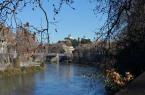
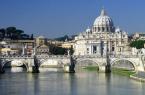
The lone arch of Ponte Rotto - On 24 December 1598, the most catastrophic flood of the Tiber ever recorded in the city claimed a thousand lives and left many injured, with houses and palaces either collapsed or submerged in mud. The river also swept away three arches of the ancient Pons Aemilius, which had already been repeatedly battered by misfortune, despite countless restorations. The bridge was never rebuilt and further demolished in the late 19th century. Its remaining ruins, however, continue to exert an irresistible attraction – the poignant beauty of imperfection. Find out more.
-
The 1960 Olympic Village - A small town with low-rise buildings raised off the ground on pillars, like modern stilt houses. Designed in line with the urban planning principles of the Modern Movement, in the summer of 1960 it was to be the shared home (in the midst of the Cold War) for athletes and support staff from the 83 nations taking part in the 17th Olympic Games, before later becoming a residential district. From 18 December, it will be at the center of the exhibition The Villaggio Olimpico in Rome. The world in three hundred thousand square meters at the MAXXI museum. Find out more.