














Rome in September, a month of unmissable events and visit opportunities. Find out what to do from 1 to 30 September 2026 and follow the suggestions thought up by our editorial staff to experience and admire the city, including along less beaten paths.
-
Roma Live events in September
-
New entries and special events in September
-
Rome free/low cost in September
-
Rome with kids in September
-
The days of Rome: key dates in the city’s history and traditions in September
-
The many facets of Rome: places of the ancient Rome, papal Rome and modern Rome to (re)discover in September
-
Itineraries and curiosities: our tips for September
Roma Live events
Roma Live is the calendar for experiencing Rome at 360°, a multimedia container dedicated to unmissable events for those living in the city and for tourists. Check here all the events for the month of September, and choose among the exhibitions, sporting events, concerts, theater shows, festivals, ballets and dance performances scheduled until 30 September. Please note: information available in this section is being updated constantly.
New entries and special events
-
REF. Romaeuropa Festival 2026 - Two months of music, dance, theatre, digital arts and family & children’s shows. From 8 September (until 15 November), the 41st edition of the Romaeuropa Festival once again brings the best of the Italian and international contemporary arts scene to the city, with over 90 shows (and 240 rehearsals) in theatres and cultural venues, and around a thousand artists from all over the world, including well-known names and emerging talents.
-
Le nozze di Figaro - The infinite facets of love in a comic opera punctuated by intrigues, disguises and plot twists, and brought to life by music that is at once light-hearted and profound. From 15 to 23 September, the “mad day” of Mozart’s masterpiece – the first of the three operas he composed in Italian – will be staged at the Teatro Costanzi in the famous production conceived by Claus Guth for the 2006 Salzburg Festival, conducted by Emmanuel Tjeknavorian.
-
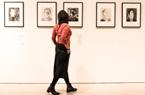
Frank Horvat - A career spanning seven decades and diverse styles, spent travelling the world in pursuit of work and telling new stories. From 11 September, the Baths of Caracalla pay tribute to one of the most versatile photographers on the contemporary scene, who has left his mark on the collective imagination by redefining fashion and travel photography – a unique journey marked by 72 images dedicated to the female world and the landscapes of the “Goethe in Sicily” series.
Rome free/low cost
Churches, palaces and fountains, courtyards and cloisters, elegant squares and secret piazzas, marbles and stones with a history stretching back thousands of years – even if you have a limited budget, the city does not skimp on its wonders. With the new pricing system, access to museums and monuments managed by Roma Capitale is free for all residents of Rome and the metropolitan city. For tourists and non-residents, on 6 September, as on every first Sunday of the month, both the national cultural sites and the museums run by Roma Capitale will open their doors to the public free of charge. On 27 September, as on every last Sunday of the month, entry will be free to the Vatican Museums (from 9 a.m. to 2 p.m., last admission 12.30 p.m.). There are also four small museums that are always free for everyone (Museo delle Mura, Museo della Repubblica Romana e della Memoria Garibaldina and Museo di Casal de’ Pazzi, from Tuesday to Sunday, and the Casa Museo Alberto Moravia, open on the second Saturday of the month), plus the FAO MuNe - Food and Agriculture Museum and Network (from Monday to Friday, with mandatory online reservation), Palazzo Sciarra Colonna (from Wednesday to Sunday) and Casa Pasolini (from Thursday to Sunday).
Free or low cost events and activities for the month of September include for example Ci vuole orecchio. Festival dell’ascolto 2026 (9-24 September), Rome Future Week (21-27 September) and Fabrizio De André Parlare Musica Award in Villa Bonelli (18-19 September); the films by Cinema Liberato in the Parco Andrea Campagna, Cinema alle Mura (Villa Fiorelli and Romanina, until 19 September), Notti di cinema a Piazza Vittorio (until 20 September) and Arena estiva della Casa del Cinema (until 30 September); visits to the Japanese Garden of the Istituto Giapponese di Cultura (on Thursdays and Fridays), Palazzo Borromeo (11 and 18 September) and the Collection of Contemporary Art of the Ministero delle Infrastrutture e dei Trasporti (MIT Contemporaneo, 19 September), tours and special openings of Archeologia in Comune 2026, Malborghetto Arch and Gabii Archaeological Park (6 September) and guided tours Passeggiate Romane; the exhibitions Raffaele Curi. Only fragile things endure forever at the rhinoceros gallery, Giuseppe Modica. Il fuoco nel mare and Saverio Ungheri. 100 anni di futuro at Mattatoio (both from 11 September), LIVING! Julian Beck pittore at Ripense, Lavinia - Parte V. Quinto gusto pistacchio e lampone at Loggia dei Vini in Villa Borghese (until 20 September), Spagna e Italia: 50 anni da incorniciare at the Spanish Embassy in Piazza Navona (until 15 September), Cento anni dell’Antica Scuola Giardinieri at Parco San Sebastiano (until 18 September) and Site inspection/Sopralluogo at the Hungarian Academy in Palazzo Falconieri; the concert Merysse - Voce e Corde in the Council Chamber of Palazzo Valentini (17 September), the Fortuna in Musica events at the Temple of Fortuna Primigenia + Gabii Archaeological Park (1 euro, 6, 11 and 12 September), the Opera Camion - The Barber of Seville evenings (12-20 September) and the organ concerts at the Church of Sant’Antonio dei Portoghesi (19 and 26 September). Find more tips on the cultureroma website.
Rome with kids
Museums to explore, educational workshops and readings, theme parks, theatrical performances and much more... Discover all the events dedicated to children scheduled for the month of September and unleash your imagination among surprising adventures, journeys through history, interactive itineraries and guided tours. Our Kids page is updated weekly: visit us again for new ideas!
The days of Rome: key dates in the city’s history and traditions
Rites, festivals, anniversaries and celebrations have always marked the life of the city, its inhabitants and its visitors: a dense calendar of fixed happenings dating back to past eras, but also to the present day, that define Rome’s identity. Discover with us some of the city’s old and new special dates and moments, with the most heartfelt or awaited occasions – or even simply the most curious ones for the month of September.
The many facets of Rome: places of the ancient Rome, papal Rome and modern Rome to (re)discover
The pagan Rome that was the center of one of the largest empires that ever existed; the symbol city of the Catholic religion shaped by the successors on the throne of Peter; the new capital of the Kingdom of Italy and then of the Republic. The history of an eternal city is inevitably made up of multiple narratives that intertwine with one another. Each month, we will introduce you to three places that show the different imagines of Rome through the centuries.
-
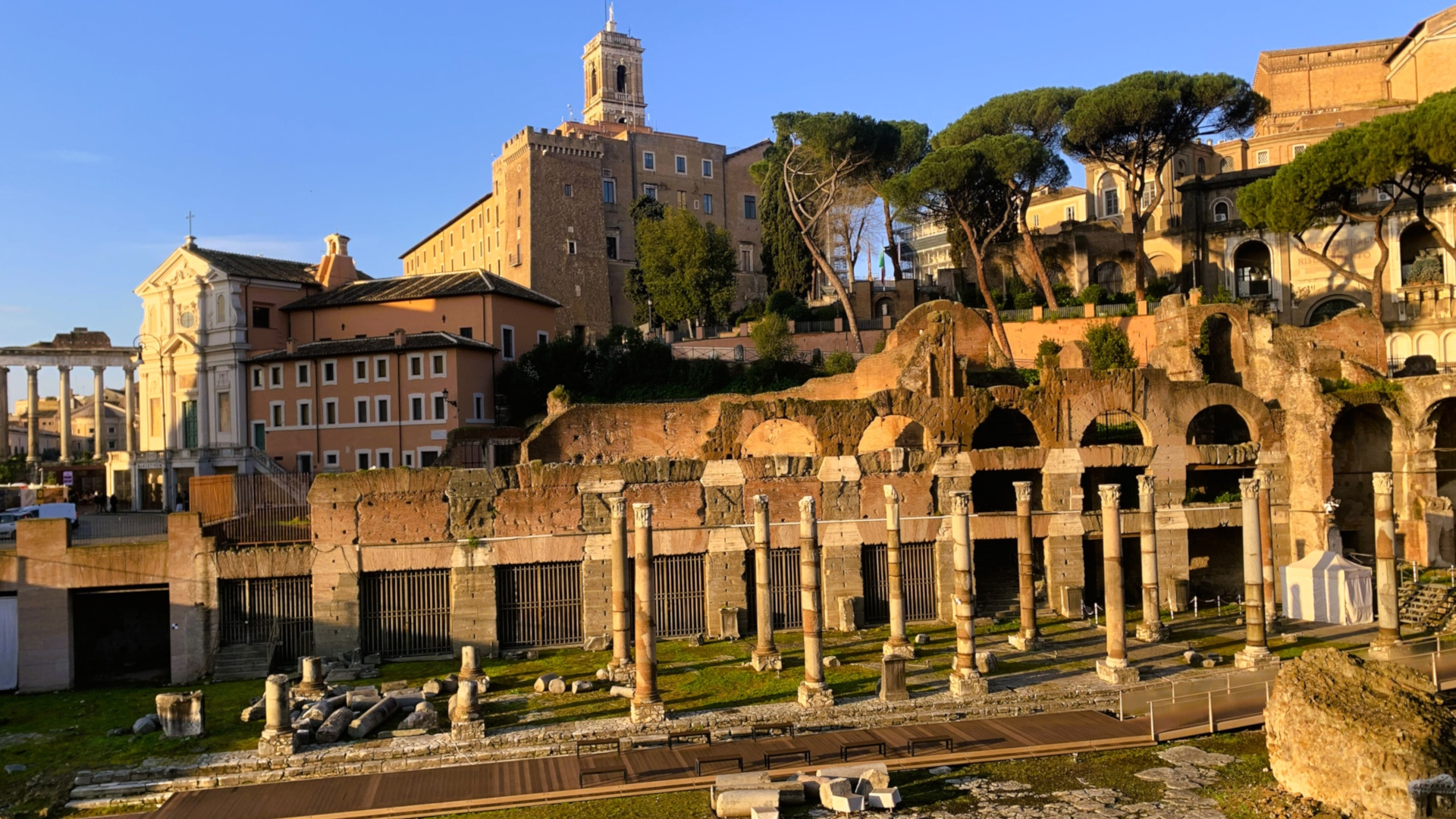
The Mamertine Prison - In 52 BC, when the conquest of Gaul seemed all but assured, Julius Caesar found himself cornered by the resistance and the military and political skills of a charismatic young leader, who managed to unite the warlike Gallic tribes against the Roman legions. Finally forced to surrender after the Battle of Alesia, Vercingetorix was taken prisoner to the capital, where he remained for six years, paraded as a trophy and then executed on 26 September 46 BC in the Carcer Tullianum, the place of imprisonment for traitors to the Roman people and prisoners of state. Known since the Middle Ages as the Mamertine Prison and situated in an area of the Roman Forum historically dedicated to judicial activities, this ancient Roman prison – the only one still preserved – gained fame for having held the apostles Peter and Paul in chains during their final days before their martyrdom, at least according to tradition. It thus became a place of worship and pilgrimage.
-
Palazzo Pamphilj - On 26 September 1657, when she died at the age of 65 at her estate in Viterbo, Donna Olimpia Maidalchini Pamphilj had long since left her days of glory behind her, having been forced into exile by Pope Alexander VII. Intelligent, strong-willed and uninhibited, capable of making her mark in a world dominated exclusively by men, Olimpia had long been the power behind the scenes in Baroque Rome. Ever since, as a young and wealthy widow, she had married, in her second marriage, the mature Pamphilio Pamphilj, brother of the brilliant prelate Giovanni Battista, the future Pope Innocent X. Together with her husband and brother-in-law, Olimpia set about expanding and decorating the family residence in Piazza Navona, where she established her court. Alongside Girolamo Rainaldi, Francesco Borromini also worked on the palace – now the Brazilian Embassy – designing the splendid gallery connecting it to the church of Sant’Agnese in Agone, which was frescoed by Pietro da Cortona.
-
The monument to Giuseppe Garibaldi - A pensive and contemplative Garibaldi sits on horseback, flanked on either side of the plinth by allegorical figures representing Europe and America, and two battle scenes (Luciano Manara with his Bersaglieri during the siege of Rome and Garibaldi’s troops in action at Calatafimi). Twenty-five years had passed since the breach of Porta Pia when, on 20 September 1895, the monument to the “Hero of the Two Worlds” was unveiled at the summit of the Janiculum (the scene of Garibaldi’s epic campaign and the Roman Republic’s desperate resistance against French troops). The decision to build it had actually been taken a full thirteen years earlier, in the wake of Giuseppe Garibaldi’s death in Caprera: the competition for the statue was won by the design of the Tuscan sculptor Emilio Gallori. According to newspapers of the time, more than 60,000 people attended the unveiling, alongside the country’s highest authorities – the King and Queen, the Prime Minister Francesco Crispi and the then Mayor of Rome.
Itineraries and curiosities: our tips
-
Rome’s “Little Alhambra”: the Greenhouse and the Moorish Tower - Polychrome glass, cast iron, stucco and exotic plants for a prince with refined tastes. Inspired by the Alhambra in Granada, the garden pavilion and the tower with their Moorish-style lines at Villa Torlonia are ingenious creations by the architect Giuseppe Jappelli, who designed them around 1839 to impress the guests of Alessandro Torlonia and his wife Teresa. Restored in 2021, the complex reopens in September following the summer closure (Tuesday to Sunday). Find out more in the dedicated page.
-
The natural and artistic heritage of Rome’s botanical garden - Over 2,500 species and unique collections, including more than 300 trees over a century old (such as oriental plane trees, oaks and Himalayan cedars…), alongside fountains, water features and avenues laid out in the 18th century by Ferdinando Fuga. Housed in the gardens of Villa Corsini since 1883, the botanical garden is open daily from 9.30 am to 6.30 pm. Special events in September include the opening day of Short Theatre (3 September) and Vendemmiata Romana (13 September). Find out more in the dedicated page.