

















Rome in July, a month of unmissable events and visit opportunities. Find out what to do from 1 to 31 July 2026 and follow the suggestions thought up by our editorial staff to experience and admire the city, including along less beaten paths.
-
Roma Live events in July
-
New entries and special events in July
-
Rome free/low cost in July
-
Rome with kids in July
-
The days of Rome: key dates in the city’s history and traditions in July
-
The many facets of Rome: places of the ancient Rome, papal Rome and modern Rome to (re)discover in July
-
Itineraries and curiosities: our tips for July
Roma Live events
Roma Live is the calendar for experiencing Rome at 360°, a multimedia container dedicated to unmissable events for those living in the city and for tourists. Check here all the events for the month of July, navigating among the exhibitions, sporting events, concerts, theater shows, festivals, ballets and dance performances scheduled until 31 July. Please note: information available in this section is being updated constantly.
New entries and special events
-
I Concerti nel Parco - Great talent, original productions and artistic fusions under the Roman sky: throughout July (and until 5 August), the Casa del Jazz and its park are hosting the historic summer festival that brings together different worlds and art forms, from music to theatre, from dance to talks and video art. A program that is always focused on innovation, alternating between young artists and performers and names already established on the national or international scene.
-
Videocittà 2026 Watercult - Digital artworks, immersive and light installations, virtual reality experiences, DJ sets, talks and live performances. From 10 to 12 July, Videocittà returns to Rome’s Gazometro, Europe’s largest industrial heritage site, with a new edition dedicated to water, an essential resource and universal symbol that spans cultures, landscapes and the collective imagination – a unifying theme capable of connecting music, art, science and visions of the future.
-
Termini escape - Two thousand years of history, art and culture brought to life through gaming and new technologies, blending the real world with virtual elements to create an advanced immersive experience. From 3 July, from 10 am to 6 pm, Palazzo Massimo invites visitors to discover the many facets of the area around Termini station – from the grand thermal baths dedicated to Emperor Diocletian at the end of the 3rd century (built in just eight years) to the most modern railway infrastructure.
Rome free/low cost
Churches, palaces and fountains, courtyards and cloisters, elegant squares and secret piazzas, marbles and stones with a history stretching back thousands of years – even if you have a limited budget, the city does not skimp on its wonders. With the new pricing system, access to museums and monuments managed by Roma Capitale is free for all residents of Rome and the metropolitan city. For tourists and non-residents, on 5 July, as on every first Sunday of the month, both the national cultural sites and the museums run by Roma Capitale will open their doors to the public free of charge. On 26 July, as on every last Sunday of the month, entry will be free to the Vatican Museums (from 9 a.m. to 2 p.m., last admission 12.30 p.m.). There are also four small museums that are always free for everyone (Museo delle Mura, Museo della Repubblica Romana e della Memoria Garibaldina and Museo di Casal de’ Pazzi, from Tuesday to Sunday, and the Casa Museo Alberto Moravia, open on the second Saturday of the month), plus the FAO MuNe - Food and Agriculture Museum and Network (from Monday to Friday, with mandatory online reservation), Palazzo Sciarra Colonna (from Wednesday to Sunday) and Casa Pasolini (from Thursday to Sunday).
Free or low cost events and activities for the month of July include for example: the events Teatri d’arrembaggio: Piraterie, InCanti e Castelli di Sabbia and Lungo il Tevere… Roma 2026; the film festival (films in original version) Filmissimi - Il cinema tedesco d’autore in the garden of the Goethe-Institut (9 July), and the open-air screenings of Cinema alle Mura, Festival del Cinema di San Lorenzo 2026 and Cinema in piazza; the tour of Palazzo Borromeo (17 July), and the visits and special openings of Archeologia in Comune 2026, the Malborghetto Arch and the Gabii Archaeological Park (4 and 5 July); the exhibitions Lavinia Part V. Fifth Flavour: Pistachio and Raspberry at the Loggia dei Vini in Villa Borghese, Renzogallo. Oltre le ceneri, Money in Space and Federica Luzzi and Naoya Takahara. Exercises in being like others at Mattatoio Roma, Francesca Woodman. Lately I Find a Sliver of Mirror Is Simply to Slice an Eyelid at the Gagosian Gallery, Federica Luzzi and Naoya Takahara. Exercises in being like others at Mattatoio Roma, Buddha Statues in the Land of Yamato at the Japanese Cultural Institute and Danh Vo at the Nicola del Roscio Foundation; the Esquilino Jazz Festival (1-12 July), the concert Cinque città per Morricone in Piazza del Campidoglio (6 July), performances by the Banda va in città and by Banda al… Museo 2026 at the National Etruscan Museum (5 July) and the Feste Musicali Jacopee in the Basilica of San Giacomo in Augusta (23-25 July). Find more tips on the cultureroma website.
Rome with kids
Museums to explore, educational workshops and readings, theme parks, theatrical performances and much more... Discover all the events dedicated to children scheduled for the month of July and unleash your imagination among surprising adventures, journeys through history, interactive itineraries and guided tours. Our Kids page is updated weekly: visit us again for new ideas!
The days of Rome: key dates in the city’s history and traditions
Rites, festivals, anniversaries and celebrations have always marked the life of the city, its inhabitants and its visitors: a dense calendar of fixed happenings dating back to past eras, but also to the present day, that define Rome’s identity. Discover with us some of the city’s old and new special dates and moments, with the most heartfelt or awaited occasions – or even simply the most curious ones for the month of July.
The many facets of Rome: places of the ancient Rome, papal Rome and modern Rome to (re)discover
The pagan Rome that was the center of one of the largest empires that ever existed; the symbol city of the Catholic religion shaped by the successors on the throne of Peter; the new capital of the Kingdom of Italy and then of the Republic. The history of an eternal city is inevitably made up of multiple narratives that intertwine with one another. Each month, we will introduce you to three places that show the different imagines of Rome through the centuries.
-
Roman Houses on the Caelian Hill - A historical and architectural complex comprising over 20 underground chambers decorated with stunning paintings and mosaics, set on different levels and from various periods – two working-class insulae converted into a luxurious domus in the 3rd century, which was in turn reused as a Christian titulus, the forerunner of modern parishes. Overlooking the Clivo di Scauro (a tiny road whose name and route follow the Roman layout), the ancient structures hidden beneath the Basilica of Santi Giovanni e Paolo give an eloquent insight into the urban and social evolution of this corner of the Caelian Hill, in a Rome caught between paganism and Christianity. On 4 July, the houses (which are normally open daily from 10 am to 4 pm) will be open exceptionally in the evening (at 7 and 9 pm) for a guided tour accompanied by music. Until 27 September, visitors can also see the modern art exhibition “Lumen ex terra”.
-
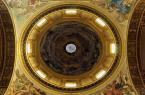
The Church of the Gesù - On 31 July 1556, when Ignatius of Loyola passed away, his Society of Jesus was just 16 years old. Yet it already had more than a thousand members and was on its way to becoming the most influential and controversial religious order in modern history – thanks in part to its boundless missionary zeal and an unrivalled ability to whisper in the ears of the powerful. The centerpiece of Jesuit history and spirituality, the church next to Ignatius’s Roman quarters – commissioned by Ignatius himself – was not completed until the end of the century, based on designs by Vignola and Giacomo Della Porta. Since 23 July 1637, the saint’s remains are in a gilded bronze urn beneath the altar of one of its chapels. The chapel is a triumph of gold, lapis lazuli and precious marbles, featuring a spectacular Baroque mechanism: a canvas attributed to Andrea Pozzo which rises and falls every day like a curtain via a system of counterweights, revealing the statue of the saint.
-
The Cartiera Latina - Its machinery began operating in 1919 and came to a definitive halt in 1986: this marked the final chapter for one of the largest paper mills in central and southern Italy, nestled amongst the trees of the Caffarella Valley and bordered by the River Almone. The small river, sacred to the ancient Romans – who celebrated the rite of the “Lavatio Matris Deum” in its waters in honor of Cybele – determined the purpose of this site. Its consistent artisanal tradition spanned the centuries: from the earliest wool-fulling facilities to the Renaissance-era “valca”, which was later converted into a mill in the 19th century and then, indeed, into a paper mill. Within the paper mill’s premises – which have been the headquarters of the Appia Antica Regional Park since 1998 – a museum was opened a few months ago, open to the public on Saturdays and Sundays: an immersive journey through original historical machinery and QR code technology, allowing visitors to relive the paper-making process, from rags to the finished sheet.
Itineraries and curiosities: our tips
-
Public toilets in ancient Rome: the latrine on the Janiculum Hill - An idea of privacy that was different from today’s standards (with seats lined up side by side) but with great attention paid to personal hygiene (for the time). It is estimated that Roman citizens had at their disposal around 150 facilities serving as public toilets: one example is the small latrine on Via Garibaldi, discovered in the 1960s and featuring risqué drawings and inscriptions as per tradition. Recently renovated, the latrine opens to the public on 22 July. Find out more in the dedicated page.
-
Pasquino and the pasquinades - A faceless voice, prone to fierce and shameless laughter, mocking the immorality and abuses of those at the top – popes, cardinals and the powerful of all kinds – through signs hung overnight on a mutilated third-century statue. Throughout his centuries-long career as an anonymous “talking statue”, however, Pasquino also drew on the scathing pens of famous writers. Such as Pietro Aretino, stabbed twice in the chest on 28 July 1525 on the orders of the papal datary Giberti, most probably because of his satirical verses. Find out more in our dedicated page.