














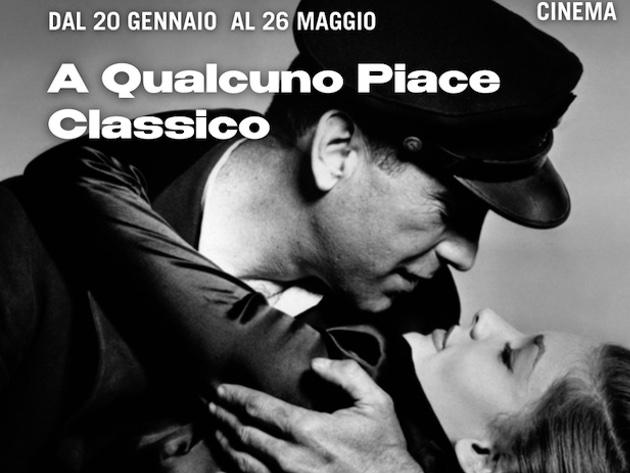
The traditional arthouse cinema festival returns to the Palazzo delle Esposizioni with the A Qualcuno Piace Classico (Some like it classic) festival. Now in its fifteenth edition, the event confirms itself once again as one of the most awaited cultural events, not only among film enthusiasts.
This year's program features a special focus on the noir genre, starting with the opening and closing titles: John Stahl's Leave Her to Heaven, the first film of its kind shot in Technicolor, and Thief by Michael Mann, one of the filmmakers who worked most on a more modern reimagining of the genre. Since "noir" is a French term, a tribute to French cinema couldn't be missed, with a Claude Chabrol film from the 1980s, Masques, a rarity reissued on 35mm film. Other films, such as Carol Reed's Odd Man Out, or Arthur Penn's masterpiece The Chase, while belonging to the noir genre, are unfolding, the former on the political theme of the Northern Irish question, the latter on a difficult social context. Politics is also present in the totalitarian world imagined in Logan's Run by Michael Andersen and, of course, in Howard Hawks's To Have and Have Not, shot during World War II, which stars Humphrey Bogart and Lauren Bacall: the latter, together for the first time on screen, would later become one of the most admired couples in Hollywood history.
Finally, as every year, an evening is dedicated to silent cinema, accompanied live, with Du skal aere din hustru (The angel of the hearth) by the Danish master Carl Theodor Dreyer, a lesser-known and much-to-be-rediscovered film, which, well ahead of its time, offers a reflection on patriarchy and couple dynamics. Another overpowering male figure is the protagonist of Él (He), a very famous film by Luis Buñuel, who created one of the most successful and scathing films of his Mexican period. Finally, remaining within the realm of surrealist cinema, this year it's Man Ray's turn to take centre stage in the usual avant-garde program: on the fiftieth anniversary of his death, it can be considered a more than due tribute to one of the most influential artists of the twentieth century, the first to demonstrate that, against all logic, a film can be made even without a camera.
Photo: official poster of the event
Informationen
Programma completo > qui
 Condividi