
















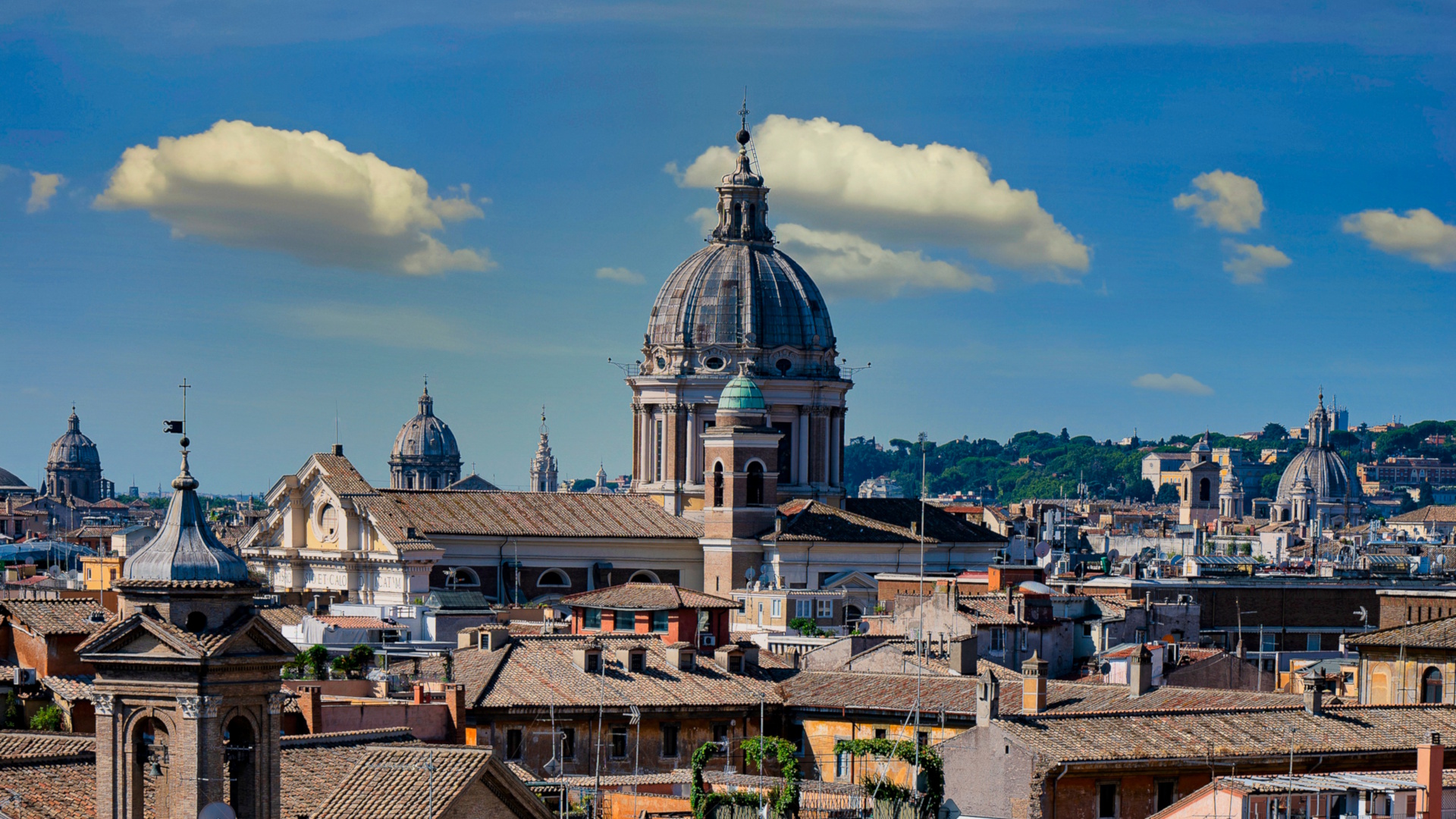
Rome in October, a month of unmissable events and visit opportunities. Find out what to do from 1 to 31 October 2026 and follow the suggestions thought up by our editorial staff to experience and admire the city, including along less beaten paths.
-
Roma Live events in October
-
New entries and special events in October
-
Rome free/low cost in October
-
Rome with kids in October
-
The days of Rome: key dates in the city’s history and traditions in October
-
The many facets of Rome: places of the ancient Rome, papal Rome and modern Rome to (re)discover in October
-
Itineraries and curiosities: our tips for October
Roma Live events
Roma Live is the calendar for experiencing Rome at 360°, a multimedia container dedicated to unmissable events for those living in the city and for tourists. Check here all the events for the month of October, and choose among the exhibitions, sporting events, concerts, theater shows, festivals, ballets and dance performances scheduled until 31 October. Please note: information available in this section is being updated constantly.
New entries and special events
-
Keith Haring - A universal visual language composed of bold lines and vibrant imagery, capable of speaking to anyone without distinction and of addressing the pressing issues of his time with a light touch: from the AIDS crisis to nuclear disarmament, from apartheid to children’s rights. From 2 October, Palazzo Braschi will explore Keith Haring’s artistic legacy from his early days to his final years, exhibiting his “radiant children”, barking dogs, and other animated creatures.
-
Rome Art Week - A week dedicated to the many facets of contemporary art and its impact on our present. From 19 to 25 October, Rome Art Week will bring together hundreds of events, including artists’ open studios, themed tours, performances, talks, and cultural projects, to offer new points of view and perspectives – hosted in galleries, foundations, museums, cultural organizations and associations, academies, and institutes, and all completely free of charge.
-
Rome Film Fest - Two weeks of cinema, but also of meetings, exhibitions, events, conferences, and debates. From 13 to 25 October, the Rome Film Fest will celebrate its 21st edition at the Auditorium Parco della Musica (and other venues throughout the city) with 18 feature films in competition, dozens of films in the non-competitive sections, and Italian and international guests ready to walk the 1,300-square-meter red carpet – one of the largest in the world.
Rome free/low cost
Churches, palaces and fountains, courtyards and cloisters, elegant squares and secret piazzas, marbles and stones with a history stretching back thousands of years – even if you have a limited budget, the city does not skimp on its wonders. With the new pricing system, access to museums and monuments managed by Roma Capitale is free for all residents of Rome and the metropolitan city. For tourists and non-residents, on 4 October, as on every first Sunday of the month, both the national cultural sites and the museums run by Roma Capitale will open their doors to the public free of charge. On 25 October, as on every last Sunday of the month, entry will be free to the Vatican Museums (from 9 a.m. to 2 p.m., last admission 12.30 p.m.). There are also four small museums that are always free for everyone (Museo delle Mura, Museo della Repubblica Romana e della Memoria Garibaldina and Museo di Casal de’ Pazzi, from Tuesday to Sunday, and the Casa Museo Alberto Moravia, open on the second Saturday of the month), plus the FAO MuNe - Food and Agriculture Museum and Network (from Monday to Friday, with mandatory online reservation), Palazzo Sciarra Colonna (from Wednesday to Sunday) and Casa Pasolini (from Thursday to Sunday). On the last Friday of every month, it is possible to visit the Farnesina collection of the Ministry of Foreign Affairs and International Cooperation. On 10 October, for the Giornata del contemporaneo 2026, the Istituto Centrale della Grafica and the MAXXI and MACRO museums will be open to the public free of charge (with a program of activities).
Free or low cost events and activities for the month of October include for example: Tevere Day (2-11 October), RomePhotoLab (2-4 October), Romadiffusa Esquilino Festival (10-11 October), the events organized as part of the YOU the YOUng City project, and the talks of Incontriamoci al Collegio Romano (20 and 27 October); the Ukrainian and Polish Film Festival at the Casa del Cinema (27-29 October) and the Internazionale a Roma documentary screenings (Palazzo Esposizioni, 9-11 October); visits to the Japanese Garden of the Istituto Giapponese di Cultura (on Thursdays and Fridays), Palazzo Borromeo (16 October), Palazzo Chigi (17 October) and the Collection of Contemporary Art of the Ministero delle Infrastrutture e dei Trasporti (MIT Contemporaneo, 17 October), tours and special openings of Archeologia in Comune 2026, Malborghetto Arch and Gabii Archaeological Park and guided tours Passeggiate Romane; the exhibitions Raffaele Curi. Only fragile things endure forever and Xi Niu: In Search of New Routes at the rhinoceros gallery, Giuseppe Modica. Il fuoco nel mare at the Mattatoio (until 25 October), Hypothèse de lecture at the Convent of Trinità de’ Monti, LIVING! Julian Beck pittore at Ripense, Il fascino di Seoul - The Charm of Seoul at the Korean Cultural Institute and Lavinia - Parte VI. Sesto gusto melagrana e salvia at the Loggia dei Vini in Villa Borghese; the musical events of Piano City Roma (3-4 October), the Festival Organistico Internazionale al Pantheon (2, 9, 16, 23 and 30 October), Salve Regina (18 October) and Por los campos de España (25 October) at the Basilica of Santi Bonifacio e Alessio all’Aventino, and the organ concerts at the Church of Sant’Antonio dei Portoghesi (3, 10, 17 and 24 October). Find more tips on the cultureroma website.
Rome with kids
Museums to explore, educational workshops and readings, theme parks, theatrical performances and much more... Discover all the events dedicated to children scheduled for the month of October and unleash your imagination among surprising adventures, journeys through history, interactive itineraries and guided tours. Our Kids page is updated weekly: visit us again for new ideas!
The days of Rome: key dates in the city’s history and traditions
Rites, festivals, anniversaries and celebrations have always marked the life of the city, its inhabitants and its visitors: a dense calendar of fixed happenings dating back to past eras, but also to the present day, that define Rome’s identity. Discover with us some of the city’s old and new special dates and moments, with the most heartfelt or awaited occasions – or even simply the most curious ones for the month of October.
The many facets of Rome: places of the ancient Rome, papal Rome and modern Rome to (re)discover
The pagan Rome that was the center of one of the largest empires that ever existed; the symbol city of the Catholic religion shaped by the successors on the throne of Peter; the new capital of the Kingdom of Italy and then of the Republic. The history of an eternal city is inevitably made up of multiple narratives that intertwine with one another. Each month, we will introduce you to three places that show the different imagines of Rome through the centuries.
-
The Domus Aurea - A deadly dish of poisoned mushrooms, served to her husband (as ancient sources suggest) by a disgruntled and ambitious first lady, marked the transfer of power from Claudius to his stepson Nero on 13 October 54 AD. Soon hated by the senatorial class, who would go on to record him in history as a mad and bloodthirsty tyrant, the new emperor was just 17 years old at the time. Exactly ten years later, the architects “magistri et machinatores” Severus and Celer designed its magnificent palace in the heart of Rome, inspired by the palaces of the Hellenistic rulers and inaugurated in January 68 AD, just six months before Nero’s suicide. A landmark of classical archaeology, whose rediscovery has exerted an enormous influence on modern artistic culture since the Renaissance, the Domus Aurea is open to visitors from Friday through Sunday; from 2 to 18 October, its Octagonal Hall is hosting performances by MOISAI - Voci contemporanee in Domus Aurea.
-
Porta Santo Spirito - In October 1541, in a Mediterranean Sea ravaged by wars, pirate raids, plundering, and the slave trade, a violent storm struck the disorganized Habsburg armies: the siege of Algiers, a pirate stronghold of the Ottoman Empire, ended in a shameful retreat that undermined the prestige of Charles V. In Rome, the renewed Turkish threat prompted Paul III Farnese to take action. He halted the restoration of the Aurelian Walls and focused on the more urgent defense of the Vatican walls. Alongside Antonio da Sangallo the Younger, architect of all the papal buildings, the Pope appointed a group of military advisers and architects – from 1545, this group would also include a hostile Michelangelo, who branded his colleague’s design as inadequate and unnecessarily expensive. The bitter disagreements between the two would also explain the incomplete state of Porta Santo Spirito, which Michelangelo deliberately left unfinished upon Sangallo’s death.
-
Palazzo FAO - The world had just emerged from a war that had (also) left it starving when, on 16 October 1945, representatives from 20 nations signed the Constitution of the Food and Agriculture Organization of the United Nations (FAO), in Canada. Three years later, following a proposal by the Italian government, the FAO agreed to move its headquarters to Rome: leased for the symbolic sum of one dollar a year, the building chosen as its headquarters was one of the grandiose architectural projects launched by the Fascist regime – originally intended to house the Ministry for Italian Africa. Interrupted by the war, work was subsequently resumed with the collaboration of Vittorio Cafiero, who had been one of the original designers, although the complex would not take on its final form until the 1990s. From 8 to 12 October, the FAO is organizing the Global Exhibition From Seeds to Foods at the Circus Maximus, featuring hundreds of exhibitors from around the world.
Itineraries and curiosities: our tips
-
Villa Glori, from the Risorgimento to contemporary art - Its avenues commemorate one of the episodes of the Italian Risorgimento for the liberation of Rome and its key figures: the small detachment of Garibaldians led by Giovanni and Enrico Cairoli, who was mortally wounded on 23 October 1867 by papal troops. Opened to the public in 1924 and dedicated to all Romans who fell for their country, the park has, however, also been home to some striking sculptural installations since the late 1990s, demonstrating the harmonious blend of art and nature. Find out more in the dedicated page.
-
The Bonaparte family and Rome: the Napoleonic Museum - Madame Mère, Pauline, Lucien and his many children, who later married into the city’s noble families… From Napoleon (who, however, would never set foot in Rome) to the early 20th century, the stories of several generations of the Bonaparte family are recounted in a museum which will celebrate its centenary in 2027. The Museo Napoleonico was opened to the public on 28 October 1927 thanks to the family collections of the brothers Giuseppe and Luigi Primoli, whose mother Carlotta was Lucien’s granddaughter. Find out more in the dedicated page.