




















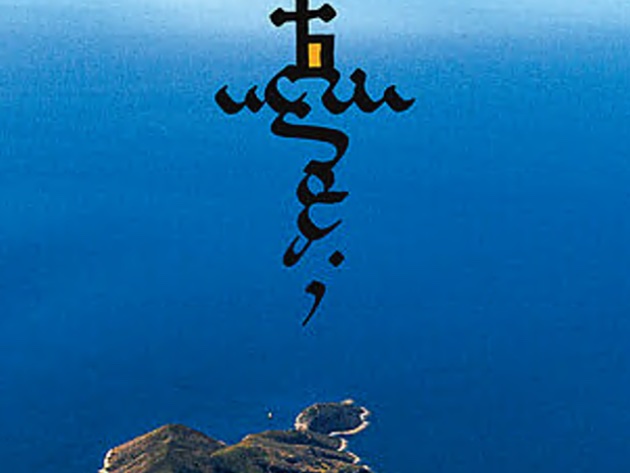
Created as part of an international project, in which the École française de Rome is a partner, the exhibition - already on display in 2025 at the Archaeological Museum in Split - illustrates the role of the islands as central hubs in the cultural and historical development of the Adriatic.
Curated by Nikolina Uroda (MHAS), Morana Cauševic–Bully (Université de Franche-Comté), and Sébastien Bully (CNRS, UMR 6298 ArTeHiS), the exhibition stems from the international research program MONACORALE, which focuses on the history and archaeology of monasteries and ecclesiastical sites in Istria and Dalmatia between the 4th and 12th centuries. The program has been conducted since 2021 by a group of French, Croatian, and Italian researchers, using a multidisciplinary approach that combines sources from archaeology, history, art history, literature, epigraphy, and landscape archaeology. Funded by the Agence Nationale de la Recherche, the program is carried out by French institutions (École française de Rome, CNRS, and universities) in collaboration with Croatian institutions such as universities and museums.
The Croatian coast and islands preserve a heritage of exceptionally valuable Christian archaeology dating back to Late Antiquity and the Middle Ages. The richness of these sites blends beautifully with seascapes of breathtaking beauty, with churches and monasteries nestled in bays, perched on islets, or perched atop mountain peaks.
Christianity took root in this part of the Adriatic from the earliest times, as evidenced by numerous remains and artifacts, such as reliquaries or objects brought as gifts from distant pilgrimages. As St. Jerome also testified, the Dalmatian islands hosted a large number of saints, monks, or hermits, as early as the 4th century, thus playing a fundamental role in the history of early monasticism in the West, as well as in that of these "holy islands”.
A few centuries later, starting in the 9th century, but especially in the 11th century, the islands and the Croatian coast welcomed Benedictine foundations, offshoots of the great Italian abbeys and true centers for the dissemination of Church reforms and papal authority. Throughout their existence, these monasteries were centers of culture and knowledge, playing an important role in the dissemination of ideas and artistic expression.
The thematic exhibition therefore aims to rediscover and better understand this rich and interesting aspect of the religious, artistic, and social history of late antique and medieval island Croatia.
Photo: official poster of the event
Informations
 Condividi