














Rome in January, a month of unmissable events and visit opportunities. Find out what to do from 1 to 31 January 2026 and follow the suggestions thought up by our editorial staff to experience and admire the city, including along less beaten paths.
-
Roma Live events in January
-
New entries and special events in January
-
Rome free/low cost in January
-
Rome with kids in January
-
The days of Rome: key dates in the city’s history and traditions in January
-
The many facets of Rome: places of the ancient Rome, papal Rome and modern Rome to (re)discover in January
-
Itineraries and curiosities: our tips for January
Roma Live events
Roma Live is the calendar for experiencing Rome at 360°, a multimedia container dedicated to unmissable events for those living in the city and for tourists. Check here all the events for the month of January, navigating among the exhibitions, sporting events, concerts, theater shows, festivals, ballets and dance performances scheduled until 31 January. Please note: information available in this section is being updated constantly.
New entries and special events
-
GAM 100. A century of the Municipal Gallery - Over 100 works to celebrate the birth of the Municipal Gallery of Modern Art. Paintings, sculptures and drawings retrace the first steps and growth of a collection that brings together original and diverse styles and voices (Metaphysical Art, Magical Realism, Futurism, the Roman School...). Artists on display include, for example, Giacomo Balla, Carlo Carrà, Antonio Donghi, Giorgio de Chirico and Antonietta Raphaël Mafai.
-
La Bohème - A musical masterpiece that is heartbreaking in its delicacy and cruelty, now directed by Davide Livermore (who also designed the sets, costumes and lighting). From 14 to 25 January, the Teatro Costanzi will transports us to late 19th-century Paris to the notes of Giacomo Puccini, telling the dramatic love story of Mimì and Rodolfo and the passionate lives of a group of young bohemian artists with little money and many dreams.
-
Glances beyond time. Extraordinary openings of the Borghese Gallery - New technologies serve the wonders of art and history in a fascinating journey through the centuries. At the Galleria Borghese, a new virtual and augmented reality visiting experience recounts (in Italian and English) the extraordinary art collection started by Cardinal Scipione Borghese in the early 17th century and the metamorphosis of the museum and its displays over time.
Rome free/low cost
Churches, palaces and fountains, courtyards and cloisters, elegant squares and secret piazzas, marbles and stones with a history stretching back thousands of years – even if you have a limited budget, the city does not skimp on its wonders. On 4 January, as on every first Sunday of the month, both the national cultural sites and the museums run by Roma Capitale will open their doors to the public free of charge. Please note: in some cases, a reservation is required, so always check in advance the websites of the museums. On 25 January, as on every last Sunday of the month, entry will be free to the Vatican Museums (from 9 a.m. to 2 p.m., last admission 12.30 p.m.). Until 31 January, on all other days (excluding exception of Mondays) visitors can explore at no cost 8 small museums with small but valuable collections ranging from prehistory to modern and contemporary art. Palazzo Sciarra Colonna (Wednesday to Sunday) and Casa Pasolini, the new cultural space in the Rebibbia neighborhood (Thursday to Sunday), are also offering free admission. On the last Friday of every month, it is possible to visit the Farnesina collection of the Ministry of Foreign Affairs and International Cooperation while on Saturday 17 and 24 January, Palazzo Chigi, seat of the Italian Government since 1961, will also open its doors free of charge. (Please note: from 1 February 2026, a new pricing system will come into effect in museums managed by Roma Capitale. Admission will be free at all sites for residents of the Metropolitan City of Rome; for non-residents and tourists, the Museo della Repubblica Romana e della Memoria Garibaldina, Museo di Casal de’ Pazzi, Museo delle Mura and Casa Museo Alberto Moravia will remain free of charge).
Free or low cost events and activities for the month of January include for example: Maurizio Nannucci’s installation on the Gazometro and Io sono il bosco. Io sono il mare at the Teatro del Lido in Ostia (from 16 January); the exhibitions Fausto Pirandello. La magia del quotidiano at the Accademia Nazionale di San Luca, Adel Abdessemed. Primavera Romana at the Galleria Continua, Antarctica, the White Continent at the CNR headquarters (until 23 January), Caterina Silva. Sette tele at the Auditorium Parco della Musica Ennio Morricone, Preghiera per andare in Paradiso con gli asinelli at the Rhinoceros Gallery, Giorgio Morandi in the Eni Collection at Palazzo Esposizioni (until 11 January), Grandi Maestri della Fotografia - László Moholy-Nagy at the Accademia d'Ungheria, Emilio Isgrò. Rosso Shakespeare at the Tornabuoni Art gallery, The Borso d’Este Bible in Rome. A Jubilee Masterpiece in the Library of the Senate of the Republic, From Pop to Eternity at La Vaccheria, ICONICOCIBO, seventy years of food posters in Japan at the Japanese Cultural Institute; the walk Cammini verso Roma - Un’impronta che resta - Via Francigena (24 January), the visits and special openings of Archeologia in Comune 2026, visits to the Casa Museo Alberto Moravia (10 January), Porta del Popolo (11 January) and the garden of the Japanese Cultural Institute; the films of the Once Upon a Time in 1976 festival at the Casa del Cinema (from 10 to 31 January, €5); Mass with the children’s choir of the Accademia Nazionale di Santa Cecilia in the Basilica of Santa Cecilia (11 January) and concerts in the Pauline Chapel at the Quirinale (Sundays, from 11 January). Find more tips on the cultureroma and informagiovani websites.
Rome with kids
Museums to explore, educational workshops and readings, theme parks, theatrical performances and much more... Discover all the events dedicated to children scheduled for the month of December and unleash your imagination among surprising adventures, journeys through history, interactive itineraries and guided tours. Our Kids page is updated weekly: visit us again for new ideas!
The days of Rome: key dates in the city’s history and traditions
Rites, festivals, anniversaries and celebrations have always marked the life of the city, its inhabitants and its visitors: a dense calendar of fixed happenings dating back to past eras, but also to the present day, that define Rome’s identity. Discover with us some of the city’s old and new special dates and moments, with the most heartfelt or awaited occasions – or even simply the most curious ones for the month of December.
The many facets of Rome: places of the ancient Rome, papal Rome and modern Rome to (re)discover
The pagan Rome that was the center of one of the largest empires that ever existed; the symbol city of the Catholic religion shaped by the successors on the throne of Peter; the new capital of the Kingdom of Italy and then of the Republic. The history of an eternal city is inevitably made up of multiple narratives that intertwine with one another. Each month, we will introduce you to three places that show the different imagines of Rome through the centuries.
-
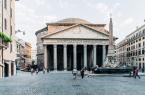
The Temple of Piazza di Pietra - Trajan’s grandniece, Vibia Sabina, was only fourteen years old when she married Hadrian in 100 AD, who may have become emperor thanks to this union. Gossip and insinuations fill the little space that official historiography allows her – neglected by Hadrian, who had other interests (the young Antinous), capricious and intractable (morosa et aspera), determined not to have children and with a praetorian prefect as her lover. However, the facts tell us that she remained at her husband’s side for almost forty years: she accompanied him on his official travels, was awarded the title of Augusta and deified after her death in 136. In memory of his wife, Hadrian may have begun the construction of the temple that now dominates Piazza di Pietra with its eleven remaining columns: incorporated into the Palazzo della Dogana in the 17th century and associated for centuries with Hadrian alone, a few years ago the temple was rightly restored to the name of Vibia Sabina as well.
-
Villa Silvestri Rivaldi - A Renaissance gem nestled on what remains of the Velia hill, which was mutilated in the 1930s for the opening of Via dei Fori Imperiali. If places have karma, the missed election as a cardinal of Eurialo Silvestri, who as secret chamberlain to Pope Paul III had begun its construction and then fell out of love with it once his hopes of social advancement went up in smoke, perhaps explains its troubled history, its rethinking and abandonment. The complex had as a result many lives and uses – sumptuous residence, then convent and textile factory, girls’ school and even a squatted social center. Long neglected, it is finally the focus of a restoration and enhancement project funded by the Ministry of Culture. Until 6 January, its gardens are reopening to the public free of charge, while from 8 January it will be possible to visit the restoration site by appointment.
-
Rome’s zoo - Two lions standing guard at the gate, playful elephant heads and animal tamers: alongside engineer Berluzzi, a thirty-year-old Armando Brasini designed in his eclectic and bizarrely visionary style, with more of a set designer’s flair than an architect’s, the monumental entrance to the future new realm of the exotic. Rome’s zoo was inaugurated amid great celebrations on 5 January 1911, following the fashion of other European cities. Its project was by the merchant and animal trainer Carl Hagenbeck, who rose to prominence with the opening of the Hamburg Zoo, the first without bars and with cages replaced by moats. Expanded in the 1930s by Raffaele De Vico, who also designed the extraordinary aviary and reptile house, Rome’s current Bioparco has changed its mission (conservation, education and research) without losing any of its charm: 17 hectares of parkland in one of Rome’s most evocative botanical (and architectural) settings.
Itineraries and curiosities: our tips
-
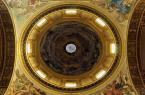
Tosca and Giacomo Puccini’s Rome - The last sixteen hours in the life of a woman who lived for art and love. On 14 January 1900, Giacomo Puccini attended the world premiere of his “most Roman” opera at the Teatro Costanzi. It is a story woven with love and death, jealousy and power, set in the gilded interiors of the Basilica of Sant’Andrea della Valle and Palazzo Farnese, ending in a bloody dawn at Castel Sant’Angelo, with the shooting of her beloved Caravadossi and Tosca’s suicide. Find out more in the dedicated page.
-
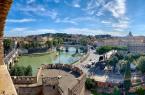
The cannon of the Janiculum Hill - Time, as we know, is a relative concept, but in Rome, for over 120 years, the firing of a cannon has punctually reminded us that it is noon. The tradition actually dates back to 1847, when the cannon shot (fired from Castel Sant’Angelo at the time) was a stratagem devised by Pius IX to remedy the confusion “that can often be caused by the different times shown by so many clocks in this capital” and to synchronise the ringing of church bells. After a brief stop at Monte Mario, the cannon arrived at the Janiculum on 24 January 1904. Find out more in the dedicated page.
Copyright © All rights reserved