


















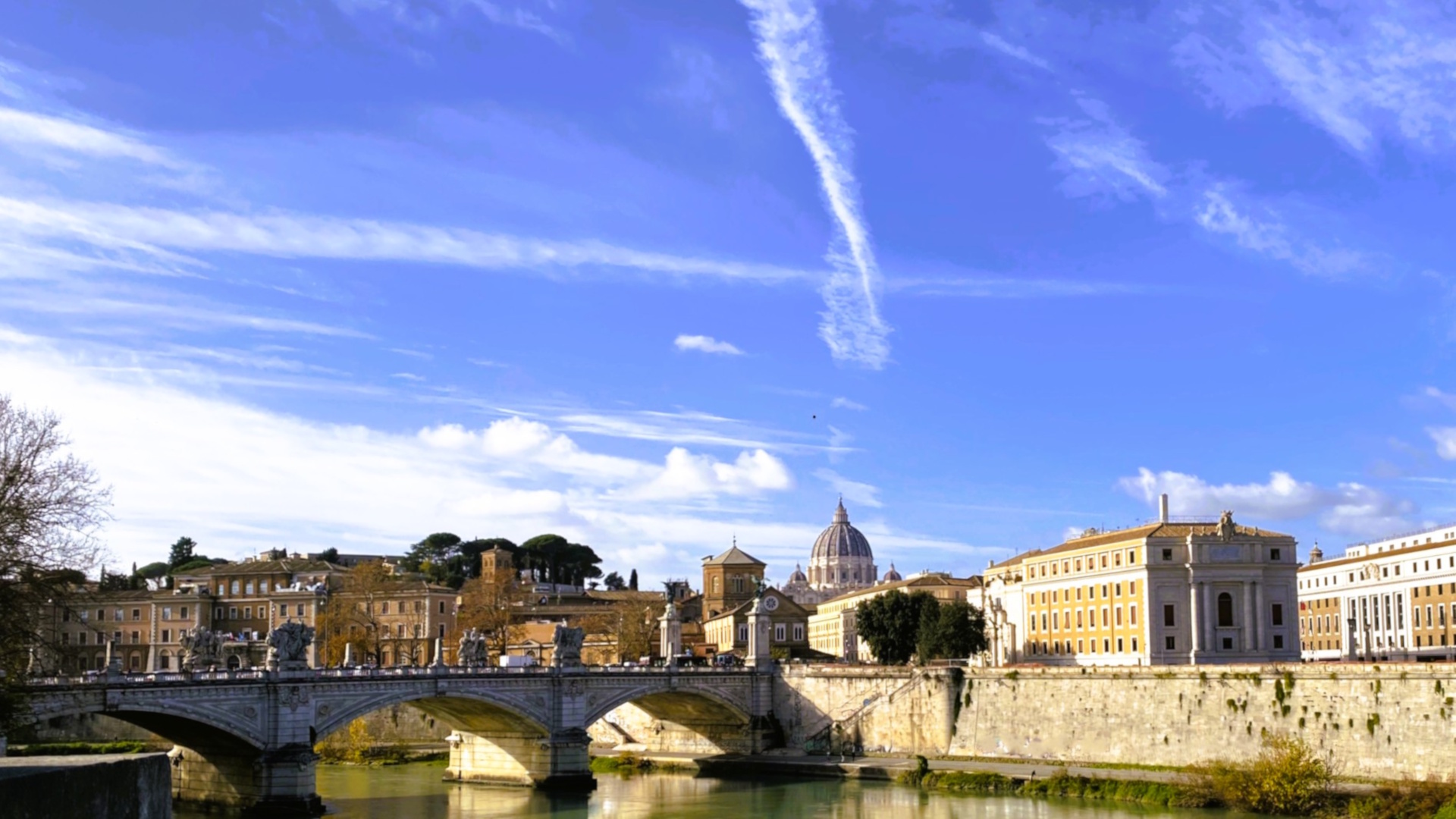
Rome in February, a month of unmissable events and visit opportunities. Find out what to do from 1 to 28 February 2026 and follow the suggestions thought up by our editorial staff to experience and admire the city, including along less beaten paths.
-
Roma Live events in February
-
New entries and special events in February
-
Rome free/low cost in February
-
Rome with kids in February
-
The days of Rome: key dates in the city’s history and traditions in February
-
The many facets of Rome: places of the ancient Rome, papal Rome and modern Rome to (re)discover in February
-
Itineraries and curiosities: our tips for February
Roma Live events
Roma Live is the calendar for experiencing Rome at 360°, a multimedia container dedicated to unmissable events for those living in the city and for tourists. Check here all the events for the month of February, navigating among the exhibitions, sporting events, concerts, theater shows, festivals, ballets and dance performances scheduled until 28 February. Please note: information available in this section is being updated constantly.
New entries and special events
-
Yorick Festival - A festival named after Shakespeare’s Hamlet’s jester to pay tribute, during Carnival, to the creative and structuring power of wit, imagination, gibes and gambols – in short, to the cheerful disorder of folly. From 7 to 17 February, Palazzo Esposizioni, MACRO, Palazzo Altemps, Palazzo Braschi and Teatro Torlonia invite us on a journey into new dramaturgy, with performances in their original language and mostly free of charge.
-
Bernini and the Barberini family - The very first patron of Gian Lorenzo Bernini, who was not yet twenty years old, the Tuscan Maffeo Barberini became Pope in 1523 under the name of Urban VIII. Over the following twenty years, the artist sculpted and built Baroque Rome in marble, stone and gold on his commission. From 12 February, a major exhibition at Palazzo Barberini recounts their extraordinary partnership and the rise of the sculptor, architect, painter and urban planner who transformed the city into the great theatre of the world.
-
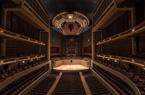
Daniel Harding. Haydn: The Creation - The seven days of the birth of the universe, from primordial chaos to the love between Adam and Eve in the Garden of Eden, set to music with enchantment and tenderness by Franz Joseph Haydn. A grandiose and moving hymn to life, conducted by Daniel Harding from 26 to 28 February in the Sala Santa Cecilia of the Auditorium Parco della Musica Ennio Morricone, together with the Santa Cecilia Choir and Orchestra and an exceptional vocal cast.
Rome free/low cost
Churches, palaces and fountains, courtyards and cloisters, elegant squares and secret piazzas, marbles and stones with a history stretching back thousands of years – even if you have a limited budget, the city does not skimp on its wonders. From 1 February, with the entry into force of the new pricing system, access to museums and monuments managed by Roma Capitale will be free for all residents of Rome and the metropolitan city. For tourists and non-residents, on 1 February, as on every first Sunday of the month, both the national cultural sites and the museums run by Roma Capitale will open their doors to the public free of charge. Please note: in some cases, a reservation is required, so always check in advance the websites of the museums. On 22 February, as on every last Sunday of the month, entry will be free to the Vatican Museums (from 9 a.m. to 2 p.m., last admission 12.30 p.m.). Also free of charge and open to everyone are four small museums (Museo delle Mura, Museo della Repubblica Romana e della Memoria Garibaldina and Museo di Casal de’ Pazzi, from Tuesday to Sunday, and the Casa Museo Alberto Moravia, open on the second Saturday of the month), Palazzo Sciarra Colonna (from Wednesday to Sunday) and Casa Pasolini, the new cultural space in the Rebibbia neighborhood (from Thursday to Sunday). On the last Friday of every month, it is possible to visit the Farnesina collection of the Ministry of Foreign Affairs and International Cooperation while on 7 and 21 February, Palazzo Chigi, seat of the Italian Government since 1961, will also open its doors free of charge.
Free or low cost events and activities for the month of February include for example: the Chinese New Year Festival in Rome - Year of the Horse 2026 in the Nicola Calipari Gardens in Piazza Vittorio Emanuele II (21-22 February) and the contemporary theatrical fairy tale Bomba o non bomba at the Teatro San Carlino (14 and 15 February); the film festivals Filmissimi - Il cinema tedesco d’autore at the Goethe-Institut (12 and 26 February) and Some Like It Classic 2026 at Palazzo Esposizioni (3 and 17 February); the visits and special openings of Archeologia in Comune 2026, the free openings of the Arco di Malborghetto (with the exhibition Malborghetto: archaeological memories of pilgrims and jubilees and interactive games for children) and guided tours of the former church of Santa Marta al Collegio Romano (5, 12, 19 February); the exhibitions Notargiacomo in velocità at the Mattatoio, Barbara Yelin: Drawing Lives at the Goethe-Institut, Fausto Pirandello. La magia del quotidiano at the Accademia Nazionale di San Luca, Adel Abdessemed. Primavera Romana at the Galleria Continua, Make Haste Slowly. Conversation Piece Part XI at the Fondazione Memmo, Agevole Sentiero per l’Anno Santo at the Vallicelliana Library (until 20 February), Inhabiting the Jubilee. Architecture, community and urban spaces at the Urban Center Metropolitano, Grandi Maestri della Fotografia - László Moholy-Nagy at the Accademia d’Ungheria and From Pop to Eternity at La Vaccheria; the concert Mingus! A Long Journey from Nogales to Cuernavaca in the Academic Hall of the Santa Cecilia Conservatory with the Santa Cecilia Jazz Orchestra (25 February), MarteDìMUSA concerts and open lessons (10, 17, 24 February) at MUSA, and organ concerts in the church of Sant’Antonio dei Portoghesi (7, 14, 21, 28). Find more tips on the cultureroma and informagiovani websites.
Rome with kids
Museums to explore, educational workshops and readings, theme parks, theatrical performances and much more... Discover all the events dedicated to children scheduled for the month of February and unleash your imagination among surprising adventures, journeys through history, interactive itineraries and guided tours. Our Kids page is updated weekly: visit us again for new ideas!
The days of Rome: key dates in the city’s history and traditions
Rites, festivals, anniversaries and celebrations have always marked the life of the city, its inhabitants and its visitors: a dense calendar of fixed happenings dating back to past eras, but also to the present day, that define Rome’s identity. Discover with us some of the city’s old and new special dates and moments, with the most heartfelt or awaited occasions – or even simply the most curious ones for the month of February.
The many facets of Rome: places of the ancient Rome, papal Rome and modern Rome to (re)discover
The pagan Rome that was the center of one of the largest empires that ever existed; the symbol city of the Catholic religion shaped by the successors on the throne of Peter; the new capital of the Kingdom of Italy and then of the Republic. The history of an eternal city is inevitably made up of multiple narratives that intertwine with one another. Each month, we will introduce you to three places that show the different imagines of Rome through the centuries.
-
The catacombs of Marcellinus and Peter - The priest Marcellinus and the exorcist Peter meet within the walls of a prison: it is the early 4th century and Rome, after fifty years of religious peace, is ravaged by Diocletian’s great anti-Christian persecution. A few decades later, Pope Damasus recounted their story. Subjected to various types of torture and forced to dig their own graves, they were beheaded and abandoned in the woods. Here they were found by the matron Lucilla, who took their remains to a cubicle she owned in one of the underground cemeteries in the Roman suburbs, which was then dedicated to their memory. Until the 5th century, the presence of Marcellinus and Peter, together with that of other martyrs, increased the phenomenon of “ad sanctos” burials, leading to a huge expansion of the catacomb network: an area of approximately 18,000 square meters with a collection of frescoes that make it a veritable art gallery of early Christianity.
-
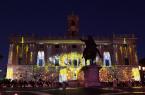
Palazzo Senatorio - “The papacy has effectively and legally lost its temporal power over the Roman State”. On 9 February 1849 the executive committee at the head of the Roman Republic, the short-lived but intense democratic experiment born after Pius IX’s departure to Gaeta, read the four articles constituting the newly formed government from the balcony of Palazzo Senatorio to an enthusiastic crowd. About seven hundred years earlier, a rebellion against another pope (Innocent II) had led to the birth of the Municipality of Rome, which has been based in the palace in Piazza del Campidoglio since 1143. The palace, renovated in the 16th century under the supervision of Michelangelo and then Giacomo Della Porta, has never betrayed its historical vocation, still hosting both the mayor’s offices and those of the Capitoline Assembly. On 1 February, as on every first Sunday of the month, it is possible to visit its majestic rooms free of charge.
-
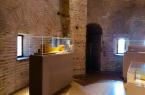
The Museo del Genio - A monumental complex overlooking the Tiber – a metaphysical-style building covering over 23,000 square meters that blends the austerity of rationalism and the classical elegance theorised by Marcello Piacentini, with a large exedra flanked by two towers and a central tower that dominates the Roman skyline. Designed in the 1930s to house collections illustrating the activities of the Arma del Genio - Corps of Engineers in wartime and in public utility operations, the complex reopened permanently to the public last October as an exhibition venue and cultural center, with two exhibitions open until 15 February: Ugo Nespolo’s inflatable sculptures and Vivian Maier's photographs. On 1 February, to mark the centenary of the American photographer’s birth, the museum is offering special admission at 5 euro, while on 11 February, families can take part in free guided tours as part of the “Generali Valore Cultura” project.
Itineraries and curiosities: our tips
-
The English Cemetery - “Here lies one whose name was writ in water” are the words chosen for his tomb by 25-year-old John Keats, who died on 23 February 1821 in Rome, the city where he had moved in an attempt to recover from the tuberculosis that afflicted him. The young English poet is just one of the illustrious and eternal guests of the non-Catholic cemetery in Testaccio, an oasis of peace with the Pyramid of Caius Cestius and the Aurelian Walls in the background. Find out more in the dedicated page.
-
Rome and La Dolce Vita - “Marcello, come here”: twenty seconds of applause and a few scandalised boos greeted the conclusion of the Roman premiere of Federico Fellini’s film La Dolce Vita at the Cinema Fiamma in Via Bissolati on 3 February 1960. A milestone in Western cinema, the film depicts a country caught between tradition and modernity – a visionary, cruel and cheerful fresco of a chaotic, grotesque and beautiful city during the economic boom years. Find out more in the dedicated page.