


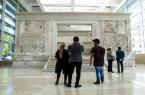



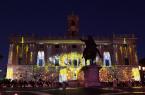
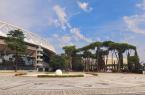


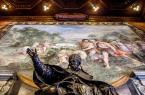







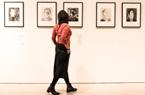











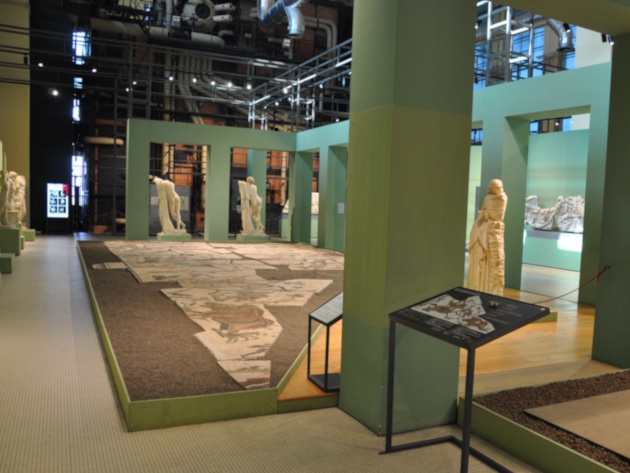
With its industrial machinery providing a backdrop and interlude to masterpieces of classical sculpture, this former thermoelectric power station – decommissioned in the 1960s – is a unique museum space within the city. Today, thanks to fully revamped visitor routes designed with accessibility in mind, the Centrale Montemartini museum aims to engage an ever-wider audience and present itself as an ideal destination to be rediscovered in one of Rome’s liveliest neighborhoods.
The recently completed renovation, funded by the national NRRP, has in fact redesigned the spaces, services, wayfinding systems and information content. In the museum’s outdoor area, the entrance square is now pedestrian-only and fitted with accessible paving, green spaces, ground-level lighting and modular seating. A protected pedestrian route (with tactile paving) ensures that blind and partially sighted people can find their way around independently. Physical accessibility has also been improved inside the museum, with new furnishings and seating, a refurbished refreshment area, a ticket desk at a suitable height for wheelchair users, a cloakroom with Braille numbering, voice synthesis systems in the lifts, two accessible toilets for people with disabilities, and a family area with nappy-changing facilities and child-friendly sanitary facilities.
In terms of sensory accessibility, too, the refurbishment has covered both the routes leading to the museum (with new vertical signage at Garbatella Metro Station on Line B) and the experience within the exhibition spaces, with the installation of a new wayfinding system and information panels featuring simple, clear and recognisable graphics. Physical aids for tactile exploration complement the new visual system and include four orientation floor plans, which help visitors understand the museum’s layout, and two reproductions of works from the collection. Finally, digital solutions enhance the visitor experience: the museum’s new app offers 16 stops organised into four different itineraries (video stories, audio descriptions, LIS videos and content for children), with multimedia insights that are easily accessible both via personal devices and through two touchscreen monitors.
 Condividi