




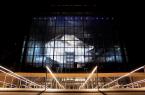
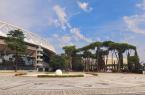
















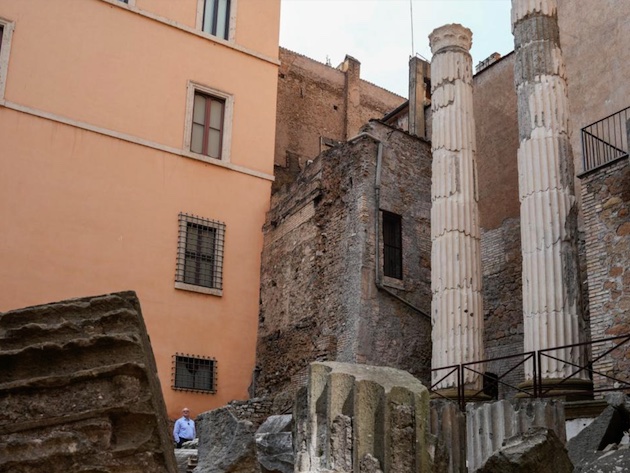
The archaeological area on via delle Botteghe Oscure, which preserves the monumental remains of a Roman temple of extraordinary historical and archaeological value, is once again open to visitors and residents thanks to the project carried out by the Capitoline Superintendency of Cultural Heritage as part of the PNRR – Caput Mundi program.
The restoration work included the consolidation and restoration of archaeological materials, including the surviving peperino columns, which were suffering from widespread structural and surface degradation. A new security system and an artistic lighting system were also installed to enhance the site, even in the evening hours. The work made the structures safer, while also improving their visibility and public accessibility.
The area was brought to light in 1938 during the widening of via delle Botteghe Oscure: the archaeological discoveries halted the planned construction projects and allowed the recovery of a fundamental testimony to ancient Rome. This intertwining of archaeology and urban history makes the area one of the most significant testimonies to the transformation of the Campus Martius over the centuries.
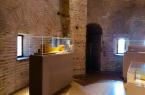
The remains visible today belong to a large monumental complex that included a temple surrounded by a quadriporticus. The sacred building, dating back to the Republican era and subsequently restored in the Domitian era after the devastating fire of 80 AD, was characterised by an imposing architecture with peperino columns covered in stucco and Corinthian capitals. Inside the modern cellars, beneath the building on via Celsa, the southern and eastern walls of the cella, dating back to the Flavian era, are preserved. Leaning against the latter is a section of the large brick base for cult statues. Inside the cella there must have been two rows of columns placed a short distance from the side walls, as can be deduced from a fragment of the Forma Urbis, the Severan marble plan – now on display in the Celio Archaeological Park – which depicts a section of the complex bearing the incomplete but certainly integrable inscription MINI[CIA].
The identification of the complex is still a matter of debate among scholars; according to one of the most accredited hypotheses, the temple would be the one dedicated to the Nymphs and would be part of the Porticus Minucia Frumentaria, built in the imperial era for the free distribution of grain, the frumentationes.
Photo credits: Press release
 Condividi