
































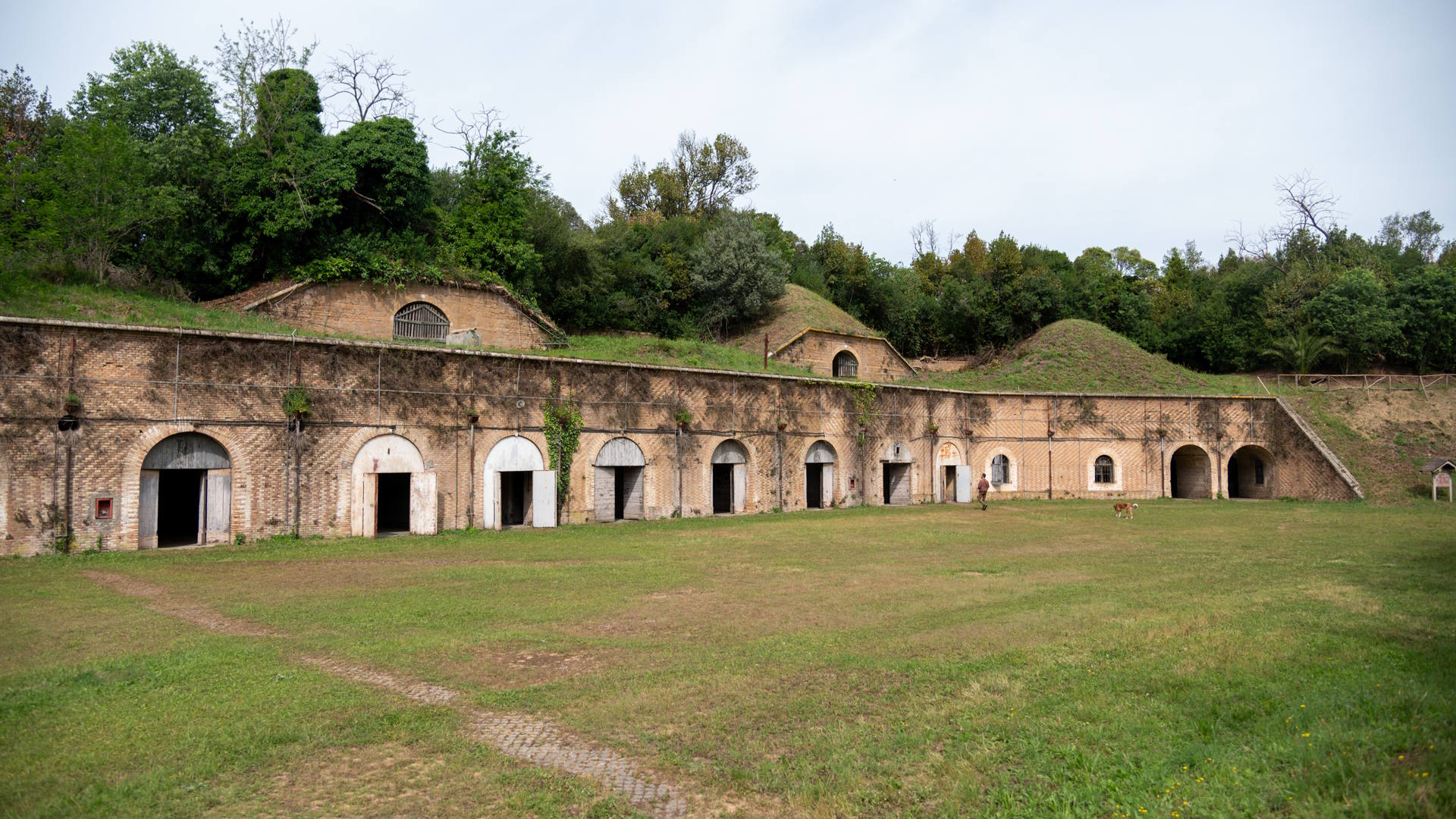
The Campo Trincerato in Rome (Rome's Entrenched Camp) is a military defence system comprising fifteen Prussian-style forts and three batteries, which was built between 1877 and 1891 to defend the outer perimeter of what was then Rome's city boundary. This system formed a discontinuous defensive belt around the city, approximately thirty-seven kilometres in length. Each fort, situated at one of the main consular roads leading into the city and named after it, was positioned approximately three kilometres from the immediately adjacent one and about four kilometres from the Aurelian Walls.
Built in 1877 after Royal Decree No. 199 of 12 August, the forts were intended to deter a potential French invasion to restore the Pope’s sovereignty over the former Papal States.
In 1919, they were disused because they were no longer fit for their defensive purpose, due to new technologies of modern warfare and the city’s gradual expansion.
Although they originally stood in open countryside, the forts have now been incorporated into Rome; they therefore stand as important period buildings in neighbourhoods that were urbanised after the war and should be put to new uses. This is currently the case for some of them, whilst others lie disused.
The structures:
- Fort Monte Antenne
- Fort Pietralata
- Fort Tiburtina
- Fort Prenestino
- Fort Casilina
- Fort Appia Antica
- Fort Ardeatina
- Fort Ostiense
- Fort Portuense
- Fort Bravetta
- Fort Aurelia Antica
- Fort Boccea
- Fort Braschi
- Fort Trionfale
- Fort Monte Mario
- Appia Pignatelli Battery
- Porta Furba Battery
- Nomentana Battery
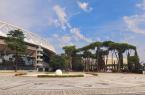
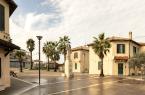
Cover image: Piazza d'Armi – Forte Bravetta, ph. Turismo Roma
Information
 Condividi
To find out about all accessibility services, visit the Rome accessible section.