



















Between the late nineteenth and early twentieth centuries, following the unification of Italy, the city’s historic center underwent major urban redevelopment. A significant portion of the old Rione Regola, for example, was demolished to make way for Via Arenula (the route designed to link Ponte Garibaldi and Largo di Torre Argentina): this resulted in the removal of Via della Mortella and Piazza de’ Branca, along with the buildings that stood on them.
In the large space left vacant by the demolitions, the German baron Wilhelm Hüffer (a wealthy merchant who had moved to Rome in 1870) proposed to the City of Rome to build, at his own expense, a new square with a garden, later named after the politician Benedetto Cairoli. Two years later, in 1888, his proposal was accepted and the project was entrusted to the Edouard André, the French landscape architect responsible, amongst other things, for the Bois de Boulogne, the Longchamp racecourse, Sefton Park in Liverpool and Woodhouse Park in Leeds. In Rome, the architect had already designed the gardens of Villa Carlo Alberto and Sant’Andrea al Quirinale, which had also been funded by the baron in exchange for a plot on Via Nazionale on which he had built his villa (now owned by the Bank of Italy).
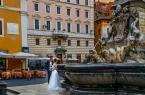
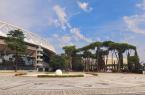
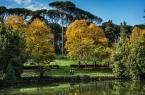
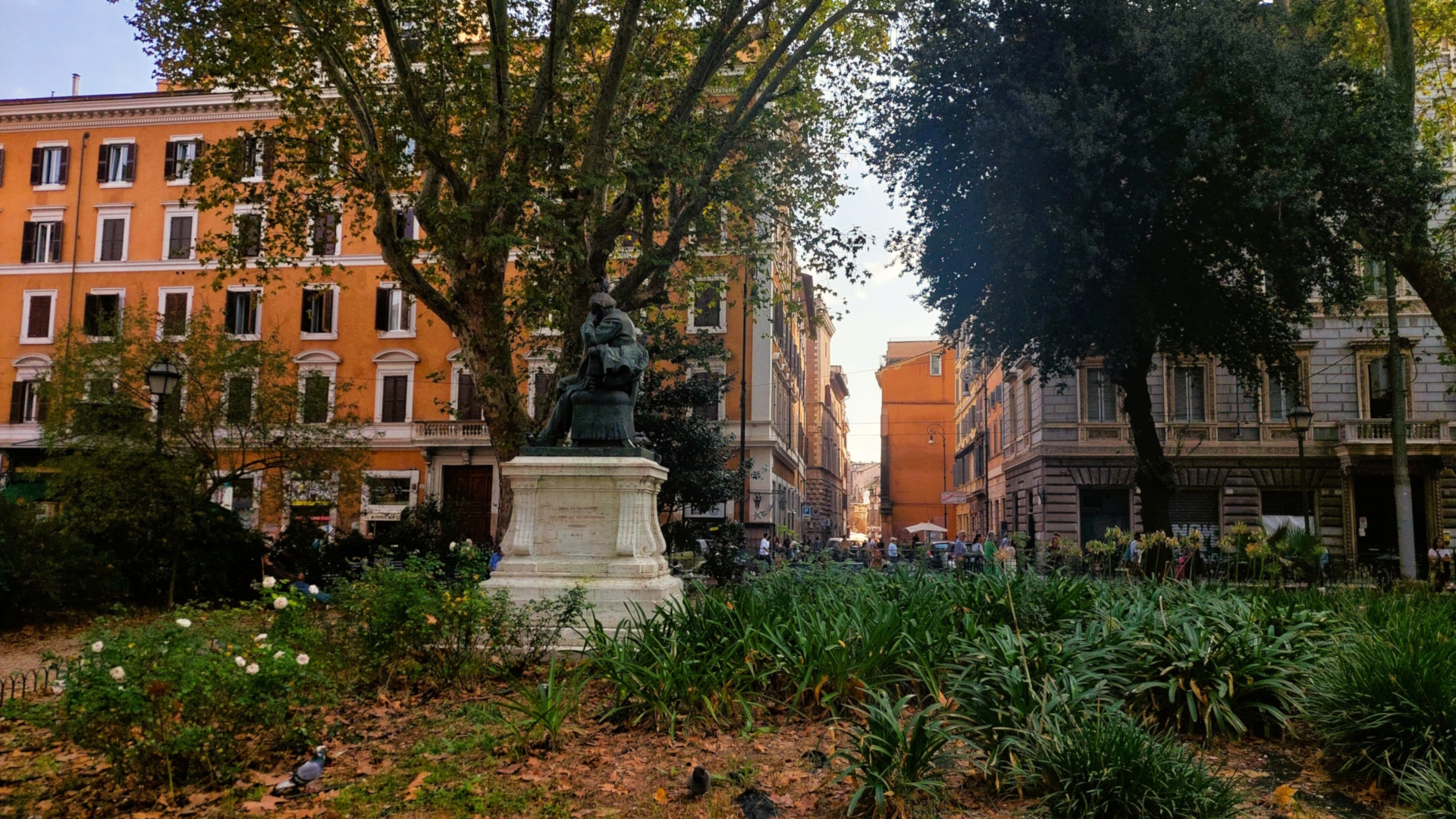
Inspired by the English “square” model (a fenced-off green space in the center of an urban space), the garden was opened to the public on 22 May 1890. A fountain and a bronze statue stand at either end, set amongst plane trees, elms, holm oaks and palms. An ancient granite basin found in the nearby Piazza Cenci was used for the fountain: the French architect’s surname is engraved on one of the basin’s scrolls. The statue – created in 1906 by Eugenio Maccagnani (a collaborator of Giuseppe Sacconi on the Vittoriano) but not installed in the garden until 1919 – depicts the republican Federico Seismit Doda, Minister of Finance in the Cairoli and Crispi governments, seated in an armchair in a pensive pose. The garden’s original gate was dismantled in 1937 to provide iron for the war effort: a new wrought-iron gate was erected to mark the Jubilee of 2000.
A plaque next to the main entrance of Palazzo Signori (at number 2 Piazza Cairoli) commemorates the garden’s creation: “S.P.Q.R. AREA PUBBLICA RIDOTTA A GIARDINO A SPESE DI GUGLIELMO HUFFER MDCCCXC” (public area converted into a garden at the expense of Guglielmo Huffer).
Information
From dawn to dusk
 Condividi
Location
To find out about all accessibility services, visit the Rome accessible section.