






































A decorative cycle of extraordinary importance for our understanding of the figurative imagery of the ancient Mediterranean. Acquired by the Italian State in May 2026, thanks to the collaboration of the heirs of the Torlonia, Sforza Cesarini and Gaetani families, the famous frescoes of the François Tomb have entered the permanent collection of the National Etruscan Museum at Villa Giulia, becoming accessible to the public once again after more than a century and a half.
Carved out of tuff between 340 and 320 BC, the tomb stands as one of the finest examples of Etruscan painting and, more generally, of ancient art that has survived to the present day. It was discovered on 1 May 1857 by the archaeologist Alessandro François on land belonging to Prince Alessandro Torlonia, in the Ponte Rotto necropolis at Vulci, one of the most important cities of southern Etruria in the 4th century BC. A few years later, the paintings were removed by Pellegrino Succi and remained in the possession of the Torlonia family, whilst the grave goods were dispersed through sales and collections, ending up in various European museums.
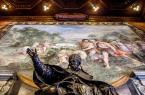
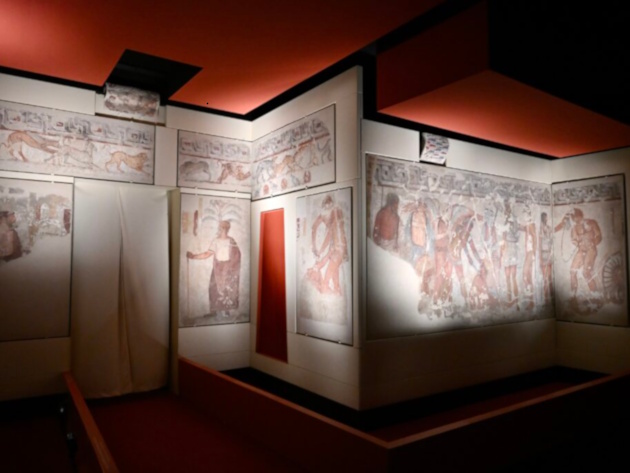
The frescoes (divided into 37 panels) shows episodes from Greek mythology and Etruscan tradition, with painted inscriptions alongside the figures that still allow us today to recognise names, faces, stories and legends. The large paintings depict, for example, the sacrifice of the Trojan prisoners at Patroclus’s funeral (though featuring the Etruscan demons Vanth and Charun) or the fratricidal struggle between Eteocles and Polynices, as well as the only known image of a king from archaic Rome, depicting the liberation of Caelius Vibenna by Macstarna, traditionally identified as the future king Servius Tullius. One of the most famous images is that of the tomb’s owner, Vel Saties: the precious purple toga draped around him is a clear sign of the figure’s rank, wealth and power.
The François Tomb is presented in a contemporary and evocative setting that makes the frescoes accessible to everyone. Visits are included in the museum admission ticket. The tomb is not open to visitors on days when admission is free (the first Sunday of the month, 25 April, 2 June and 4 November).
Francois Tomb, National Etruscan Museum at Villa Giulia, photo Valentina Sensi
Informations
dalle 8.30 alle 19.30
ultimo ingresso ore 19.00
Non è visitabile nei giorni ad ingresso gratuito (prime domeniche del mese, 25 aprile, 2 giugno e 4 novembre).
 Condividi