










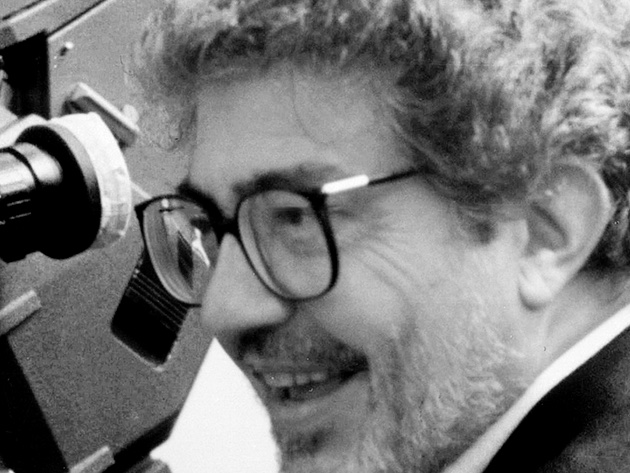
On the tenth anniversary of his death, the Museum of Rome Palazzo Braschi hosts the exhibition Ettore Scola. Non ci siamo mai lasciati (Ettore Scola. We never left each other), curated by Silvia Scola and Alessandro Nicosia, which traces the artistic and personal journey of the great director.
The exhibition is divided into three thematic sections that present Scola's life and work in chronological order: The Man, The Artist, and Rome.
The first section reconstructs the beginnings of Ettore Scola, born in 1931 in Trevico, a small town in Campania, and his education between Southern Italy and Rome, in the Esquilino neighborhood. It was here that his attentive and sympathetic gaze on the contradictions of reality began to emerge. While still very young, he entered the circle of “Marc'Aurelio" - an Italian satirical periodical - where he met, among others, Federico Fellini and Steno. This marked the beginning of an extraordinary career as a screenwriter, which led him to collaborate with some of the leading figures of Italian comedy and to work, across radio, television, and film, including with Alberto Sordi, contributing to such iconic films as Il sorpasso and I mostri. In 1964, he turned to directing, developing a personal, ironic, and deeply civil style, capable of recounting everyday life while intertwining it with the greater history: his films give voice to the dreams, fragilities, and contradictions of an entire country.
The second section, divided into the subsections The Screenwriter, The Illustrator, and The Director, offers a comprehensive portrait of an auteur: from his early satire to his cinematic maturity, Scola explores and interprets twentieth-century Italian culture. His intense and recognizable filmography includes masterpieces such as C’eravamo tanto amati (We All Loved Each Other So Much), Brutti, sporchi e cattivi (Ugly, Dirty, and Bad), and Una giornata particolare (A Special Day), all films that depict Italy with irony and deep humanity.
The third section is dedicated to the director's special relationship with Rome. Born in Irpinia but a Roman by adoption, Scola observed and chronicled the capital with a gaze that was both affectionate and lucid. Rome is the protagonist in his films: a vibrant city where individual and collective stories intertwine, a mirror of Italy's transformations from the postwar period to the present day; from the suburbs to the bourgeois terraces, places become settings for encounters, conflicts, and memories. A deep and mutual bond, therefore, further cemented by the homage the city paid to him in 2016 in the heart of Villa Borghese.
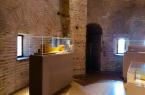
Enriched with never-before-exhibited documents, the exhibition reveals various aspects of his creativity, presenting photographs, manuscripts, objects, original screenplays and personal notes, newspaper and magazine articles, cartoons, and scene sketches—not just sketches, but actual "visual scripts" through which Scola studied the tics, faces, and weaknesses of Italians, transforming journalistic satire into the great cinema that defines him. The exhibition is rounded out with films and documentaries, works of art, and, among the most important memorabilia, the director's chairs, the typewriter, the first takes, and the trench coat worn by Federico Fellini in C’eravamo tanto amati. Many of the materials come from the Scola family archive, curated over the years by Marco Scola di Mambro, Ettore's grandson.
The exhibition is accompanied by a catalogue published by Silvana Editoriale which, through previously unpublished iconographic materials and testimonials - including those of Fanny Ardant, Giuseppe Tornatore, and Dacia Maraini - retraces the origins, artistic journey, and legacy of an artist who knew how to tell the story of our country.
The exhibition, promoted by Rome Capital, the Department of Culture and Coordination of Initiatives Related to Rome's Holocaust Remembrance Day, and the Capitoline Superintendency of Cultural Heritage, and curated by Silvia Scola and Alessandro Nicosia, is organized and produced by C.O.R. Creare Organizzare Realizzare, with the organizational support of Zètema Progetto Cultura. The exhibition also features materials from Rai Teche, the Luce Historical Archive, and loans from the Studio EL Collection – Cinecittà S.p.A.
Photo: official poster of the event
Informations
Dal 2 maggio al 13 settembre 2026
dal martedì alla domenica ore 10.00-19.00
Ultimo ingresso un'ora prima della chiusura
Giorni di chiusura: lunedì
CONSULTA SEMPRE LA PAGINA AVVISI prima di programmare la tua visita al museo
 Condividi