

































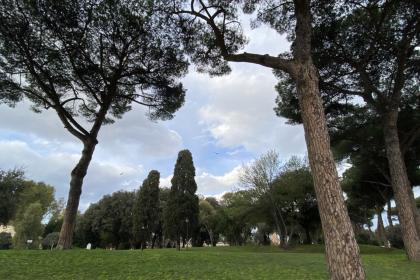
Colle Oppio Park, one of Rome's most beloved historic gardens, has regained its historic appearance and original character.
Thanks to restoration and enhancement works carried out by the Capitoline Superintendence for Cultural Heritage as part of the PNRR Caput Mundi programme, one of the city's most remarkable monumental parks has been returned to its former splendour, offering residents and visitors alike a unique place where archaeology, landscape and architecture come together in perfect harmony.
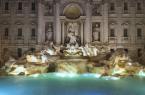
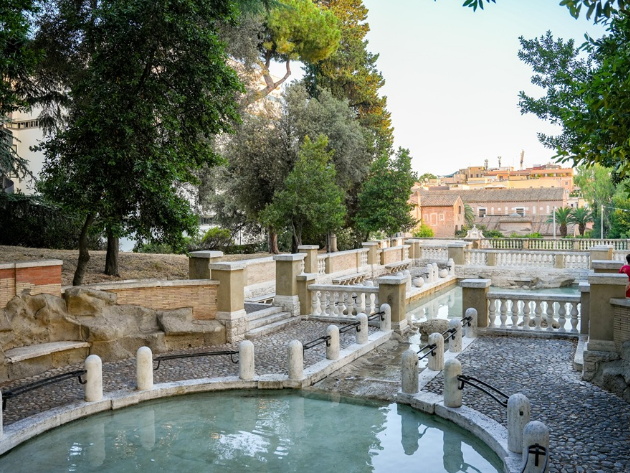
With an investment of approximately €1.5 million, the project focused on some of the park's most significant features: the two monumental entrance gateways on Via delle Terme di Traiano and Via Nicola Salvi, the striking Nymphaeum Fountain, the Amphora Fountain, and, above all, the historic water supply system that had been out of operation for decades.
The restoration went far beyond the aesthetic recovery of the structures. Alongside the consolidation of the architectural elements and the restoration of stone, brick and cement-grit surfaces, the most deteriorated sections were reconstructed and the original infrastructure brought back into operation, including the historic hydraulic system designed by architect and landscape designer Raffaele de Vico. Thanks to modern water recirculation and recovery technologies, implemented in line with environmental sustainability principles, the fountains once again become a defining feature of the landscape, restoring the park's original scenic character as envisioned nearly a century ago.
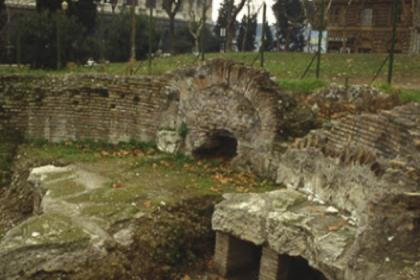
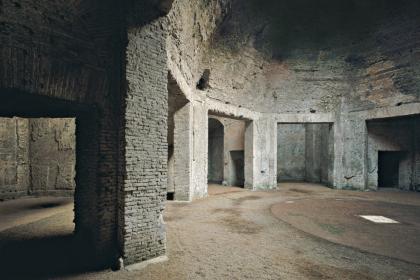
Colle Oppio Park is one of Rome's most evocative green spaces, home to some of the finest remains of Imperial Rome, including the Domus Aurea, the Baths of Titus and the Baths of Trajan, all set within the landscape design created between 1928 and 1936 by Raffaele de Vico and Antonio Muñoz.
The project was made possible through the collaboration between the Capitoline Superintendence for Cultural Heritage, the Department of Infrastructure and Public Works, and the Department of Environmental Protection of Roma Capitale, with the technical support of Acea Ato 2 and Areti, whose contribution was essential in restoring the park's systems and completing the overall redevelopment of the site.
The history of Colle Oppio Park dates back to 1871, when, following Rome's designation as the capital of the Kingdom of Italy, the area was earmarked for public gardens as part of the conservation plan for the so-called "reserved monumental zone". However, the park as we know it today only took shape during the 1920s and 1930s, under the Governorship of Rome, when particular emphasis was placed both on enhancing the city's ancient Roman heritage and on creating new public green spaces.
Between 1928 and 1932, Raffaele de Vico designed the first section of the park around the remains of the Domus Aurea, organising the landscape around two grand tree-lined avenues enhanced by fountains and monumental entrances. A few years later, between 1935 and 1936, Antonio Muñoz completed the upper part of the hill, transforming it into a vast archaeological park that successfully combined historical heritage with spectacular landscape vistas.
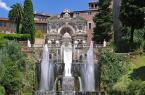
Cover image: Nymphaeum Fountain, Colle Oppio Park. Photo: Roma Capitale.
 Condividi
Parc de Colle Oppio et des Thermes de Trajan
 Condividi
Thermes de Titus
 Condividi
Domus Aurea
 Condividi