

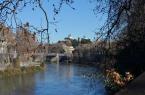

























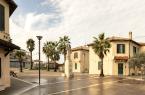

A unique complex nestled in the greenery of the Appia Antica Park, close to the Aurelian Walls. Flanked along its entire length by the Almone, a small tributary of the Tiber held sacred by the ancient Romans (and, since the 1940s, largely diverted underground), the former paper mill is one of the few surviving examples of industrial archaeology in the city.
For much of the 20th century, the complex was in fact one of the largest paper mills in central and southern Italy. The area’s artisanal and industrial tradition, however, began much earlier, in the Middle Ages, with the first facilities for fulling woolen fabrics, later called a “gualchiera” or “valca” from the Lombard term “walkan”, meaning to roll. In the mid-17th century, when the plague was raging in Rome, the facilities were used to disinfect the wool in mattresses. Two centuries later, in the 19th century, the facility was converted into a mill for grinding natural substances for various uses: valonia, a powder extracted from oaks used in leather tanning; then myrtle (Myrtus communis), used in medicine; and finally, in 1875, pigments for ceramic factories.
The industrial paper mill, equipped with a steam boiler powered by three electric motors, began operations in 1919. In the 1930s, the company produced high-quality paper for the publishing industry by processing cotton, linen or hemp rags. Due to the progressive pollution of the Almone river, by the late 1940s the mill switched to using waste paper to produce mainly straw paper, fioretto paper (of inferior quality) and detergent tubs, distributed throughout Italy. The paper mill closed permanently in June 1986. Since 1998, the complex has housed the headquarters of the Appia Antica Regional Park, which oversaw its restoration and opening to the public, and the “Fabrizio Giucca” Library, featuring the “Antonio Cederna” conference hall.
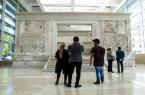
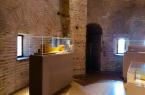
In April 2026, the Museo della Ex Cartiera Latina was inaugurated within the complex, offering an evocative journey through original historical machinery, videos and multimedia content that allows visitors to retrace the history of the factory, its processes and its role in the city’s industrial development. The outdoor green space is home to the Hortus Urbis educational garden, an educational area dedicated to the traditions of the Roman countryside, and a rest area. For more information on the museum, please visit the official website.
Informaciones
Orari apertura al pubblico dell'area verde e del parcheggio:tutti i giorni ore 8.30 – 17.00 (ora solare)tutti i giorni ore 8.30 – 19.00 (ora legale)
Per le modalità di visita consultare il sito ufficiale.
 Condividi
Location
Para conocer todos los servicios de accesibilidad, visite la sección Roma accesible.