











































The Roman tradition of cicoria
A recipe that perfectly represents the homemade cuisine of Rome, with its intense flavors and authentic ingredients that reflect the characteristics and history of the region.
A cornerstone of Roman “cucina povera”, the humble peasant traditional cooking, it is still one of the most popular and beloved side dishes today. For its simplicity, it belongs to everyday cooking but is also a staple on the menu of any trattoria with true Roman cuisine, alongside other evergreens such as “misticanza” (the typical mix of wild herbs and vegetables) or “puntarelle” (which are nothing more than the heart of a variety of cultivated chicory, catalogna). Perfect on its own on a slice of toasted bread, sautéed chicory, also known as dandelion greens or wild endive, pairs perfectly with many meat and fish main dishes, from “saltimbocca” to tripe, and gives us a flavor that makes every dish unique.
A bit of history
“Me pascunt olivae, me cichorea levesque malvae”, as for me, olives, chicory greens and light mallows provide sustenance, wrote the poet Horace in his Odes at the end of the 1st century BC. Already known in ancient Egypt, where it was used both as food and as a medicinal plant, chicory (scientific name Cichorium Intybus) has survived the centuries without losing its identity, despite the numerous varieties cultivated from the wild plant and gradually used even in the most refined gastronomy. Ancient texts (from Pliny the Elder to the physician Galen) describe it as effective against liver and intestinal disorders. Rich in fiber, vitamins, and minerals, with its countless (purifying, diuretic, digestive, anti-inflammatory, etc.) properties, chicory has never disappointed expectations (both as a food and in herbal medicine), passing from the tables of ancient Rome to the vegetable gardens of medieval monasteries and Renaissance gardens. And since the 18th century, its roasted ground root has been used as a decent and healthy substitute for coffee, widely used in Italy during the Napoleonic era and the two world wars.
The bitter queen of wild herbs
A perennial and weedy plant, chicory has always been the vegetable of the poor, the one used to feed oneself when the garden offered nothing else and in times of hardship and sacrifice. Although the common cultivated chicory is just as good, the true Roman chicory is the wild variety that sprouts haphazardly and jaggedly among the tall grass, on the edges of cultivated land or along paths, with its beautiful indigo flowers. Picking it by hand in the countryside and selling it retail was a real profession in Rome in the not-too-distant past, that of the “cicoriaro”, now replaced by local market stalls. Whether wild or cultivated, chicory retains its rough charm, its rustic nature, and its earthy scent. Its inherent (love-it-or-hate-it) bitterness is a distinctive feature that sets it apart from many other leafy vegetables. However, it mellows when cooked, becoming a balanced flavor, soft and full.
Garlic, olive oil and chili pepper
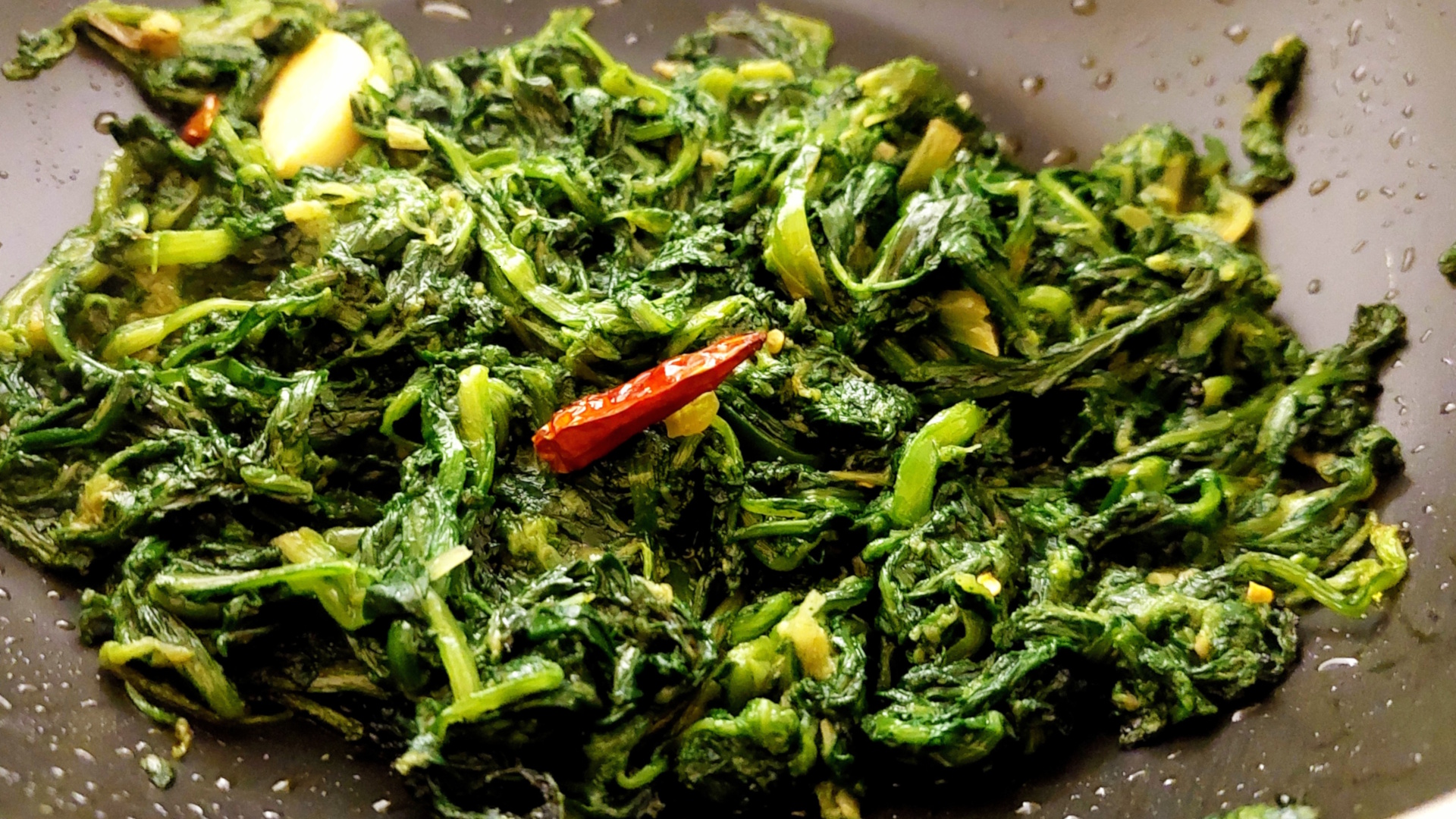
The preparation of sautéed chicory greens requires very few ingredients and steps. After being cleaned, washed thoroughly, boiled in salted water (but if the leaves are small and tender, this step can be skipped) and drained scrupulously, chicory is then sautéed (ripassata) in a pan with plenty of extra virgin olive oil, fragrant garlic cloves and a pinch of chili pepper, stirring it often to allow it to absorb the flavor. The bitterness of the vegetable and its strong character blend with the spiciness of the chili pepper, creating an incredible burst of flavor that is impossible to resist and reminds us of the value of simplicity and the importance of preserving traditions, even in the kitchen.