


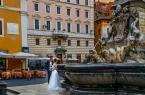


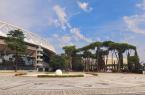










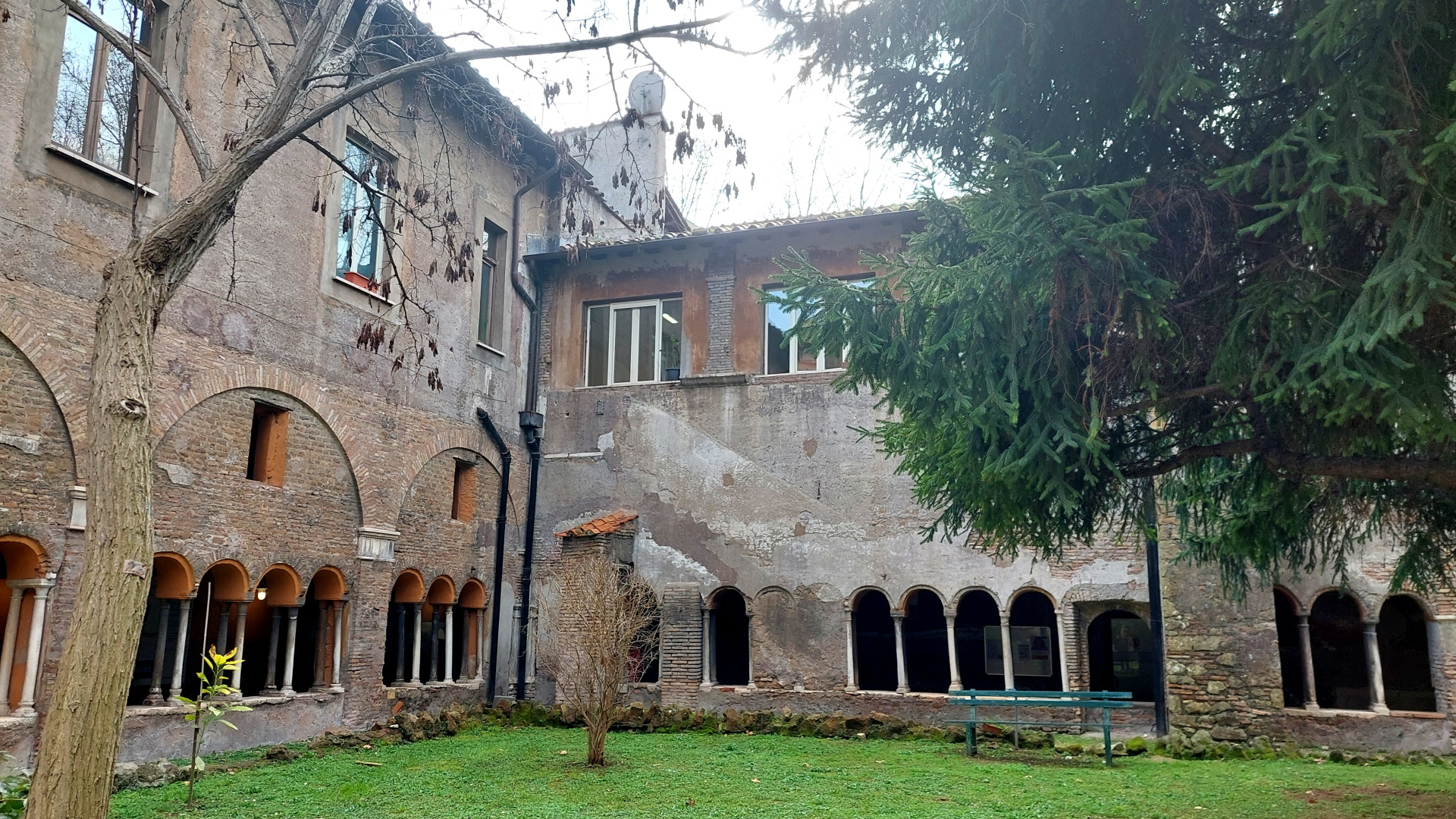
El Presidio Nuovo Regina Margherita domina la Piazza San Cosimato, a pocos pasos de viale Trastevere. El complejo hospitalario está anexo a la antigua iglesia de San Cosimato, construida en el siglo X.
La parte más antigua se organiza alrededor de dos claustros de diferentes épocas: los siglos XIII y XV.
Según un documento del "Regesto Farfense", el noble romano Benedetto Campagna fundó, hacia mediados del siglo X, un monasterio dedicado a "Santos Cosma y Damiano en mica áurea" (porque fue construido sobre la arena presente en las laderas del Janículo, de un color ligeramente dorado), más conocido como S. Cosimato, nombre derivado posteriormente de la contracción de ambos nombres.
Cosma y Damiano eran dos hermanos, médicos (conocidos como anargyri, que significa "sin dinero", porque atendían a los pobres gratuitamente) que fueron decapitados, tras prolongadas torturas, bajo el mandato de Diocleciano en el año 303 en Ciro, cerca de Antioquía, donde fueron enterrados. La construcción del monasterio se completó en 1069, y ese mismo año el papa Alessandro II consagró la iglesia, como lo conmemora la placa descubierta en 1892 y que aún se conserva aquí. En 1229, el papa Gregorio IX asignó el monasterio a los benedictinos camaldulenses, quienes permanecieron allí hasta 1234, cuando el mismo pontífice decidió confiarlo a un grupo de clarisas enviadas por Santa Clara, quien en ese momento era reclusa con sus compañeras en el monasterio de San Damiano de Asís (por esta razón también llamadas las Reclusas de San Damiano o Clarisas), con el fin, como dijo el pontífice, de "mitigar la ira de Dios sobre la Ciudad Eterna mediante una vida de oración y sacrificio". Esto confirmaría el rumor popular de que la reasignación del monasterio a las clarisas se debió al comportamiento y la gestión "inapropiados" de los benedictinos. En 1246, las clarisas llevaron a cabo una renovación inicial tanto de la iglesia como del convento, gracias en parte a la riqueza donada por la familia de la abadesa Jacopa Cenci. A pesar de las obras de restauración realizadas durante los dos siglos siguientes, en 1475 todo el complejo se encontraba en un estado de deterioro tan grave que el Papa Sixto IV intervino para evitar su ruina definitiva, ordenando la reconstrucción de la iglesia y parte del monasterio desde los cimientos.
El monasterio dejó de funcionar como sede conventual el 12 de agosto de 1891, cuando la abadesa recibió la orden oficial de abandonar San Cosimato mediante un acta de expropiación de la Congregación Religiosa y, posteriormente, un acta de cesión del monasterio a la ciudad de Roma para su conversión en hospicio.
Posteriormente, el edificio sufrió numerosas transformaciones: un albergue para ancianos, enfermos e indigentes; el Hospicio Umberto I de San Cosimato; en 1925, pasó a formar parte de los Institutos Unidos de Asistencia y Caridad de Roma, hasta la década de 1960, cuando se inició la construcción del hospital especializado en ortopedia y cirugía. Fue renovado por el arquitecto Alegiani y el ingeniero Secchi e inaugurado en marzo de 1970 como el Nuevo Hospital Regina Margherita.
Complejo San Cosimato. Fotografía: Turismo Roma
Informaciones
 Condividi
Location
Para conocer todos los servicios de accesibilidad, visite la sección Roma accesible.